
Put on your storm boots, because there’s a rant coming…

Runner people and fitness people are not the same species. They may look similar, but gym people don’t know squat about endurance, and endurance people don’t know squat about how to lift weights. I am an endurance person who spent 6 years learning everything the gym people could teach me, and then slamming my face into my palm every time they tried to teach me anything about endurance. I’m going to take a few posts to rant about all the bullshit that I’ve heard come out of gym people’s mouths over the years. Originally this was going to be all one post, but there is just too much to say. So I’m going to say it and then I’m going to take a deep breath and let it go.
Gym rat myth no. 1: Running is bad for you.

 |
| Yeah, deadlifting WRONG is bad for your back. Running wrong is bad for you too. |
The argument goes like this, “Every runner gets injured. The body isn’t made to take that much impact, and all runners wind up hurt and hobbling around like old men before their time. I knew a guy once who ran every day, and he needed 2 knee replacements by the time he was 50.” These are the same people that will jump down your throat if you try to tell them that deadlifting is bad for your back. Let’s be a little more clear: The wrong kind of running is bad for you, just like deadlifting wrong is bad for your back. Most recreational joggers fall into a few traps that will cause injury, undue wear and tear on their joints, and a general symptom of hating life when they run. It’s not because running is bad for you, it’s because they’re doing it wrong!
- Too much, too fast, too soon
 Let’s start with the obvious. Just like it takes time to build up the strength to deadlift heavy, and you need to strengthen your tendons and work on your form to safely lift a heavy load, it takes a long time of progressive overload to get to a point where you can handle a structured running training program. For many, this means starting with just a mile or so 3 times a week for several weeks. Few running programs start so modestly, and thus the majority end with as much heartache as a French art film. Gym rats are forever reminding you that sore muscles are a sign that your muscles haven’t finished recovering from your last workout, and if you don’t rest you won’t get stronger. The same rules apply to running, but the signs that you’re not recovered are way more subtle, and almost every single person I’ve ever met overestimates their ability at the beginning of a program. They cross their overuse threshold and get hurt or begin to ingrain compensations. For the record, I see the same thing in deadlifting. People who are quad dominant (nearly everyone) can lift more weight loading their quads and back than their glutes and hamstrings, and so they develop improper deadlifting form that aggravates their knee and back problems, and ingrained habits that are very hard to break. More on this some other time.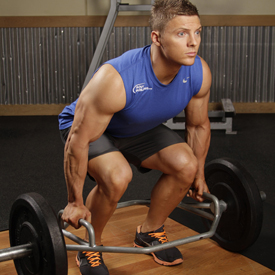
This is a poor deadlift set-up: note the knees forward of the ankles, the excessive knee bend, and the weight in the midfoot. This is the deadlifting equivalent of overstriding. See, sometimes even the guys in the Bodybuilding.com top can do things wrong - Improper movement patterns and muscle imbalances
Ninety-nine out of 100 runners will suffer from the following: ankle immobility (which can lead to foot pain, heel pain, shin pain, and other dysfunctions up the chain), quad dominance (which can lead to knee pain, low back pain, IT band issues, weak core, and everything that comes with crappy running form and overstriding), underactive lateral stabilizers (which can lead to knee pain, hip pain, foot pain, and sudden injury such as twisted ankles), and underactive core muscles (which can lead to back pain, shoulder pain, knee pain, and generally crappy running form that will cause everything mentioned in this list so far). You’re not going to win against these risks unless you give up everything invented since the stone age, but runners need to take steps to manage these imbalances. Runners need to foam roll, do active stretching techniques (such as a dynamic warm-up), and retrain the neuromuscular system to teach the correct muscles to fire in the correct combinations to manage all of life’s imbalances.
Does this mean that running is worse for you than deadlifting? Absolutely not. Running uses almost exactly the same muscles as deadlifting in almost exactly the same proportions to each other, and thus a gym rat needs to manage the same issues that runners do: tight hamstrings, tight ankles, protracted shoulders, and gluteal amnesia. If you don’t have the hamstring, hip, shoulder and ankle mobility to reach the bar on the ground and load the right muscles, you’ll get hurt. If you do more weight than your muscles can currently handle, you’ll use the wrong muscles to compensate, and you’ll get hurt. If you lift too often without the proper recovery, you’ll get hurt. It’s the same thing, people! -
"It isn't gymnastics or ice-skating, you know." - Emil Zatopek
Whether for the reasons listed above or just because you run like a Muppet, running form (just like deadlift form) needs to be constantly monitored and reworked to find your strongest, most efficient you. I don’t believe that there is one true “correct” running form -- many legendary runners such as Emil Zatopek and Dave Scott have notoriously terrible running form. The trick is finding the most efficient and safe form for your body.
| "Ultramarathon Man" Dean Karnazes overstrides like many ultradistance runners |
 |
| Dave Scott says himself that he "runs like a duck" |
 |
| Emil Zatopek looked "like he'd been stabbed in the heart" when he ran. |
 |
| Haile Gebrselassie does that weird thing with his arms |
Crappy form, whether running or lifting, will make you feel like you’re putting out a lot of effort without much result (because you are!), and eventually lead to injury. Most running form can’t be corrected consciously; it’s just too complex a motion that happens too quickly and too many times (up to 120,000 times per hour) for you to consciously override muscle memory, so when a certain hitch starts to develop in our stride, or personal idiosyncrasies start to lead to pain and injury, then you have to manage it. “Management” may mean foam rolling, drills, visualizations (e.g. “running over logs”), or functional strengthening exercises that teach the correct muscles to fire in a certain pattern.
Think that you don’t have to be constantly monitoring and retraining your technique in weightlifting? Of course they do!
- The wrong shoes
I love hearing people who have no clue what they’re talking about talk about shoes. There are as many answers to, “What’s the best shoe for me?” as there are to, “How do I find my soulmate?” (no pun intended). The answer is different for every individual, and will change over the course of their life and their running career. The answer is to run barefoot, except if you’re one of those people who should be running with mattresses on your feet, unless you’ve always had good luck with a traditional Asics-type running shoe, unless you can handle running in Newtons. And never get a shoe with orthodics or corrective features, unless of course you need orthodics or correction.
Only one thing is for sure: don’t run in ice skates.
Barefoot running is appropriate for a small amount of volume (mostly just drills) for smaller runners of advanced abilities. Run too much in Vibrams or no shoes at all, and you will get a weird gait where your hips and knees never fully extend. Next time you see someone running in Vibrams (and they’re always guys bigger than 200lb, aren’t they?!), you’ll notice that they don’t run heel-to-toe, or toe-to heel, but instead place their entire foot down as one piece, using their knees and hips as the shock absorbers. To reduce the impact, they scoot along with hips and knees always slightly bent and never use the full springing capacity of their glutes and hamstrings, instead relying on the quads (worsening the quad dominance we’ve already touched on).
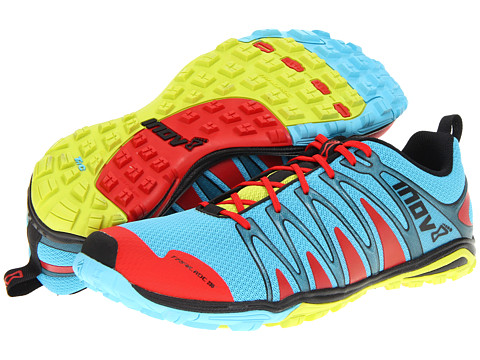
I’m a fan of zero drop, hard soled shoes but they may not be appropriate for new runners, runners with particularly tight calves and restricted ankle mobility, or those who have been running without injury in the regular Asics-style running shoe for years.

Old school shoes: These may be necessary for heavier runners who need the extra cushioning to handle the heavier load. However, I don’t think they’re the best choice for smaller runners, unless they’ve been running in them for years without injury. For an explanation why, just read Born to Run. Next!

Nike Frees: UGH! I HATE these shoes. Nobody should be running in these shoes. The concept is that they’re supposed to allow your foot to move the way it wants to move, but the soles are TOO flexible. As the uppers stretch out (as they always do on these cheap shoes), your foot slips around in the shoe. And because the sole is made to flex in ways that the human foot does not, the small muscles in your feet work double time to find purchase in your crappy slippery shoes. Nike Frees are a sure path to foot pain, rolled ankles, and maybe even a broken wrist if you try to change directions suddenly when they’re wet.

Newtons: I have drunk the Newton Kool-Aid and I am sold. These days I run almost exclusively in them, and only use hard-soled, zero drop shoes like Inov8’s for trail running and to mix it up on recovery runs. They hold up really well to high volume (and I can even wear them without pain long after the time has come to throw them out), and the forefoot lugs do make faster running much more comfortable. However, it took a long time for my achilles tendons to adjust to the strain that an elevated forefoot put on them, and they are less comfortable at a pace slower than 9 min/mi, so I don’t think they’re good for slower runners.
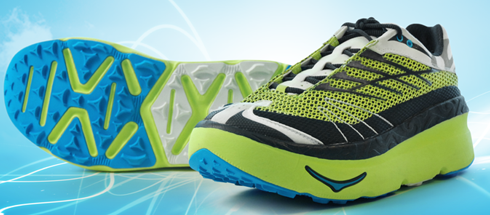
Super fluffy shoes: I went back and forth about these shoes for a long time. On the plus side, the extra padding on shoes like Hokas and Altras reduce the impact through your legs when running ultradistances or when running downhill. On the negative side, having to push off of a softer sole means that your muscles have to work harder to get the same amount of spring in each step, and the extreme squishiness does weird things to your foot’s relationship with the ground. I have a pair of Hokas, and ran a few trail runs with them before I decided that I didn’t like not being able to feel the trail surface underneath me in case it was rocky or technical. Next I tried using them on a 20 mile run,but afterward my legs felt more sore than if I’d run an extra 10 miles, and I resolved never to do that again. Not one to throw out a pair of $160 shoes after only a few runs, I tried wearing them for recovery runs. On the bike trail near my house there is a wooden footbridge that has a little bounce to it. I noticed that running on that foot bridge in my super squishy shoes was doing weird things to my vestibular system, and every time I ran on that bridge in my Hokas I would come home feeling dizzy and nauseous because the strange feedback from my feet to my brain was convincing my vestibular system that I must be dizzy.
- Not everyone’s made to run
It may not be PC to say, but not everyone’s made to run. If you weigh over about 200lb, it puts so much load on your skeletal system, that it just isn’t the best use of your time to be running more than about 30 miles per week. If you have a severe leg length discrepancy, or some other orthopedic condition or structural issue that interferes, running may not be for you. There are many things that can be fixed and managed, but not everything. Be realistic about your running prospects, and if running really isn’t good for you, then pick something else.
***
 Before I sign off, there is one more gigantic load of crap that I would like to address: the idea that oxidative stress of endurance training makes you more susceptible to cancer and some made-up thing called “cardiac fatigue”. I think this is just hogwash. Those pedaling this theory claim that endurance athletes who train at a high level have a lower life expectancy than… someone (soccer players? Olympic lifters? yogis? elephants? I’m not sure how you would isolate out the single variable of “excessive” endurance training). The theory is that all of that extra breathing that comes with burning an extra 1000 calories or so per day creates a higher concentration of free radicals in your body, which causes cell damage, which causes aging, which causes death.
The human body has evolved to deal with the adaptive stress that comes with breathing by eating a diet rich in anti-oxidants, which remove free radicals from the body. Thus, the free radical problem is not a problem with breathing volume, it’s a problem with the proportion of breathing in an endurance athlete’s lifestyle to the number of antioxidants in the standard American diet. And do you really think that the chronic free radical damage can stand up to the biological stress that comes from eating the kind of high protein, high suppelement diet that most serious weightlifters use?
For most of us mortals, pushing yourself to the level of effort that elite athletes can sustain would actually signal imminent death to your brain and cause you to do anything to slow down (e.g. puke, faint, experience extreme pain, poop your pants, breathe fire...). There’s a reason that our brains don’t let us put out the amount of effort that it takes to lift a car off a baby or outrun a mountain lion: because putting out that kind of effort could really fuck you up. You have enough power in your muscles to rip your muscles off your bones or crush your skeleton, and it’s your effort monitor in your brain (what Tim Noakes calls “the central governor”) that protects you from that kind of power output unless it is a matter of life or death. Athletes teach their Central Governors that it is safe to push themselves closer and closer to that limit over a lifetime of training. Do you think that putting out that level of effort day after day is good for you? It is not.
Let’s get one thing clear: training for elite sport is not good for you. I don’t care what the sport is: bodybuilding, running, Strongman, or elite bowling. The low body fat that it takes for many female athletes to perform at the highest level causes you to stop menstruating. That’s not good for you. Having muscles so big that you can’t wipe your own ass: that’s not good for you. Lifting so much weight that your blood pressure skyrockets to heart attack levels, or your tendons might rupture: that’s not good for you! Doing so much yoga that you can scratch your opposite ear with your toe from behind your head: that’s not good for you! As for endurance being worse for you than other forms of exercise, it’s apples and oranges. Wear sunscreen, don’t run next to the freeway, and eat your veggies, and you’ll be fine.
And one more thought for the road. While endurance training may have a greater oxygen demand during the activity, weight training has a far greater oxygen demand AFTER the activity (EPOC), so the oxidative stress of the two types of exercise may not be as drastic as the gym rats may think. So there!
Hrumph.
Next I’ll tackle Myth no. 2: Cardio is not good for weight loss

No comments:
Post a Comment