Tuesday, January 13, 2015

Lifting weights is better than cardio for weight loss

This post is part 2 of my “Shut up your face if you don’t know what the hell you’re talking about” answer to all the dumb things I’ve heard about cardio from people who don’t do cardio.


The high-end, education-focused gym where I used to work was a wonderful place to learn, but a terrible place to work (labor violations, discrimination, and exploiting employees are a matter of routine there), so last summer I started interviewing at other gyms. Since a new lower budget gym was opening up less than a mile from my house, I interviewed for a job as their personal training sales director. It was one of those interviews that went more like an orientation than an actual interview, and the hiring manager spent most of the time explaining their sales pitch than asking questions of me. The pitch went something like this:

Most people who join a gym are joining to lose weight, so they come and use the cardio machines and don’t lose any weight. Do you know how many calories it takes to lose a pound of fat? 3500 calories, that’s 500 calories a day. Do you know how many calories you burn in 30 minutes on the treadmill or elliptical? 200-300 calories. You’re never going to lose any weight with that kind of calorie burn. You would have to do an hour or more on the elliptical every single day to lose a pound a week, and as you get smaller you get to eat less and less and exercise more and more to lose any weight. Do you know what the key is to weight loss? Muscle! Every extra pound of muscle you put on burns about 100 extra calories per day. If you put on an additional 5 pounds of muscle, you can be that friend that gets to eat whatever they want because you’ll be burning an extra 500 calories every day just going through your day without doing any exercise. Now you can’t put on 5 pounds of muscle in just a few weeks, it’ll take awhile. You will need to commit to a year of training (meanwhile, he is scratching down all these numbers on the back of a 1 year contract). But our personal training sessions are only 30 minutes, and in those 30 minutes you will not only burn calories, but you will also build the muscle that you need to burn more calories every day. And that way you don’t have to do any cardio!


Let’s ignore all of the other reasons why this presentation was offensive to my integrity as a fitness professional (and a person with a brain), and just focus on the weights vs. cardio argument. Plenty of other fitness programs use a similar argument to sell their method of fitness: Crossfit, Jillian Michaels videos, and personal trainers the world over - including the high-end gym I worked at. And the argument, like Disney’s Pocahontas, is based on a true story, but not the whole truth.


Energy balance - where those 500 calories come from?
For most people you can burn 500 calories in about 45 minutes of running, an hour of “vigorous” cycling (think, Spin class or a tough group ride), or about an hour and a quarter of intense circuit training. These numbers are estimates and will vary based on your body and fitness level. No matter how you burn those 500 calories, you can eat them right back with one Clif bar, a grande latte, and a rice cake. At my size, the number of calories I burn in a marathon can be eaten right back in one Chipotle burrito. Clearly, you can eat yourself out of any work you do in the gym with a few extra forkfuls of food at every meal. No matter what method of exercise you use, nutrition must be the greater part of your weight loss plan.

If you’re not thoroughly depressed yet, consider cheat days. The idea is that if you behave 6 2/3 days of the week, you can have one cheat meal, or better yet, spread the cheating over the course of the day. So let’s say you’ve been good all week, netting a deficit of 500 calories per day for 6 days. To reward yourself, you go to the Cheesecake Factory and eat:
2 avocado egg roles (2x960 cal)
A chicken caesar salad (980 cal)
A piece of strawberry cheesecake (730 cal)
2 glasses of wine (2x120 calories)
Total: 3870 calories
In one meal, you have not only erased the 3000 calorie deficit that you had accumulated over the course of the week, but you have also added an additional 1000 calories to your tab. At that rate, you can expect to gain a pound every 3.5 weeks. I don’t mean to depress you, but you might as well give up the idea that rich foods are a god-given right. If you want to lose the weight and keep it off, your concept of what food is can no longer include cheescake and fried egg rolls. Tough titties.

Muscle gain… and the role of shitty trainers
It is not all that easy to put on 5lb of muscle (especially if you’re a chick, naturally kind of skinny, or not that good at lifting weights). You have to train consistently, in the correct range of reps and intensity, progressively increasing total load and work done (weight x time under tension), while still incorporating enough rest for your muscles to rebuild. Oh yeah, and you have to be in positive energy balance (meaning eating more calories than you’re burning), so if you don’t want to gain weight while you’re building muscle it will happen even more slowly.


Yeah, bro. That is totally the most
efficient and safe way to do whatever
it is that you're trying to do.
Most trainers, in an attempt to dazzle you with how awesome they are, change up the program too much for the kind of progressive overload you need to efficiently build muscle. It is also difficult for a trainer to land on the correct load that will produce true failure between 8 and 12 (preferably 10) reps. Instead, 10 reps becomes like a contract: you reach 10 and stop before you have reached the level of intensity that will truly build muscle (you have fulfilled your side of the contract), or your trainer picks a weight that is too heavy, you can’t fulfil your end of the contract, and so they pick something that is too light so that you can finish with a feeling of success and easily reach your contractual obligation of 10 reps… and then don’t give your muscles the stimulus they need to grow. And a lot of trainers just aren’t very good and do dumb stuff like train your upper body more than your lower body (training the legs releases the most growth hormone, so even if you want a bigger upper body you will still get better results if you train your lower body as well), train one muscle group more than its opposing group, or let you get away with bad form and use the wrong muscles to do the work. Add to that the fact that most people are not consistent about showing up to their training sessions with their A game 3-4x per week, and the chances of overcoming lifestyle inertia to put on those 5lb of muscle on the same diet is pretty remote.


Remember, too, that in the sales pitch scenario you’re here to burn calories so that you can lose weight. You will build more muscle and burn more calories the harder you work in your weightlifting session, but most people can’t handle the cardiovascular demands of a true circuit session. I learned pretty quickly that the best way for me to end a session early would be to have a guy do a set of body weight squats followed by a set of push-ups in their first month of training. When they stood up to do the second set of squats, their blood pressure would stay low, the blood vessels in their legs would dilate, and then they would get faint and nauseous. Nearly every time, the guy would end up lying on the ground with his feet in the air asking for orange juice so he wouldn’t pass out. So much for trying to sell him personal training...


Even if you are fit enough to handle the blood pressure changes, lactate clearing, and high heart rate demands of a true circuit workout, it’s still hard to match the calorie-burning capacity of a cardio workout of a similar intensity. Let’s say you do an intense circuit of 3 sets of 10 repetitions of 7 exercises. Every set will take you roughly 20s, but every transition between exercises will probably also take about 20s. As you do more and more of these anaerobic exercises back-to-back, your blood lactate level and heart rate will climb, and eventually between sets you will need an extra minute or so of rest to get your heart rate back below your anaerobic threshold (the threshold you simply can’t sustain for more than a few minutes). Even if your trainer is excellent at managing time, you are still probably only working for 15-20 of those 30 minutes and the rest is dedicated to recovery, explaining, demonstrating, collecting equipment, and correcting. Although your heart rate is higher during those 15-20 minutes than it would be if you were running, it's not high enough to compensate for the lost time. In a 30 minute weightlifting session, you’d be lucky to burn more than an underwhelming 250 calories.


This missing link: the role of fitness in exercise weight loss
Let’s go back to the slimy Chain Gym sales guy and dissect his pitch. It is based on the assumption that burning 500 calories is a difficult and onerous task. Speak for yourself, Mr. Meatsweats; I burn 500 calories during one of my recovery workouts, and routinely burn more than 1,000 calories per day every day during marathon training. (Have you ever noticed that every time someone makes the “weights burn more calories” argument they severely underestimate the calorie cost of an hour worth of activity? Like 250lb guys estimating an hour of running at 400 calories?) Burning 500 calories is only an onerous task if you are unfit and suck at it. In order to be able to burn 500 calories per session, you need to start with burning 200 calories per session and slowly build up from there. In short, the ONLY way you can lose weight through exercise is if you make exercise a part of your daily routine and stop thinking of it as an onerous task.


You can totally change your metabolism with those little
things. What are they? Bottle caps? Here, have a cookie.
The same goes for weightlifting, by the way. If you want to put on 5lb of muscle quickly, then you’re going to have to build up the fitness to do the intensity that builds muscle most efficiently. Let’s say that you have to lift 1 million ogblats (a made-up standard of measure, abbreviated &) to put on 5 lb of muscle. If you can lift 500& for 4 sets of 10, 3 times per week it will only take you 4 months to get the work done. However, if you are a novice and can only lift 200&, for 3 sets of 12 repetitions, twice per week it will take you 6 years to do the work it takes to put on 5lb of muscle. Of course, this example is simply meant to illustrate a point, because muscle gain isn’t nearly so linear. Instead, let’s consider a more familiar example from the cardio world: a runner. Let’s take 2 runners that are trying to lose weight: each of whom burns 100 calories per mile. Each needs to run 700 miles and maintain their calorie intake to lose 20lb. However, the runner who can run an hour a day at 7mph can lose 20lb in 14 weeks, while the “jogger” who can only run 40 minutes at 5mph will take more than twice as long (30 weeks, or over 6 months) to burn the same number of calories.


A note about Crossfit (and other circuit training gimmicks): some exercise programs downplay the role of fitness in an exercise program’s effectiveness by claiming that circuit training  - defined as any resistance training with minimal rest - is a shortcut to burning more calories. However, no matter how you scale the workout, a fit person will still burn more calories per session by either lifting a weight for more reps per unit of time, or by lifting more weight for the same number of reps. There's no way around it. If you're not fit, you can't burn that many calories through exercise. So much for burning off that muffin top at the gym.


The take-home
No matter how you slice it, a successful weight loss program has to include a nutrition component. The reason that most people don’t lose weight by cardio training is that they don’t have the fitness to outpace their appetite. However, once you build the fitness for it, resistance training doesn't burn quite as many calories as cardio. The only resistance-based athlete that can compare to the 6,000 daily calorie demands of a Tour de France rider is perhaps a Strongman competitor (who is still eating MORE than his body requires to maintain his muscle mass at 5-7K calories). For mere mortals, it doesn't really matter what you choose, as long as you will be able to enjoy doing it frequently for a long time while you build the fitness to burn a shitton of calories. The best way to burn calories through exercise is to build the fitness to be able to work out hard for an hour, and then focus on your diet.

Next bullshit myth: You can run faster by lifting weights.

Thursday, January 8, 2015

Running is bad for you

Put on your storm boots, because there’s a rant coming…


Runner people and fitness people are not the same species. They may look similar, but gym people don’t know squat about endurance, and endurance people don’t know squat about how to lift weights. I am an endurance person who spent 6 years learning everything the gym people could teach me, and then slamming my face into my palm every time they tried to teach me anything about endurance. I’m going to take a few posts to rant about all the bullshit that I’ve heard come out of gym people’s mouths over the years. Originally this was going to be all one post, but there is just too much to say. So I’m going to say it and then I’m going to take a deep breath and let it go.

Gym rat myth no. 1: Running is bad for you.


Yeah, deadlifting WRONG is bad for your back.
Running wrong is bad for you too.
The argument goes like this, “Every runner gets injured. The body isn’t made to take that much impact, and all runners wind up hurt and hobbling around like old men before their time. I knew a guy once who ran every day, and he needed 2 knee replacements by the time he was 50.” These are the same people that will jump down your throat if you try to tell them that deadlifting is bad for your back. Let’s be a little more clear: The wrong kind of running is bad for you, just like deadlifting wrong is bad for your back. Most recreational joggers fall into a few traps that will cause injury, undue wear and tear on their joints, and a general symptom of hating life when they run. It’s not because running is bad for you, it’s because they’re doing it wrong!
  • Too much, too fast, too soon
    Let’s start with the obvious. Just like it takes time to build up the strength to deadlift heavy, and you need to strengthen your tendons and work on your form to safely lift a heavy load, it takes a long time of progressive overload to get to a point where you can handle a structured running training program. For many, this means starting with just a mile or so 3 times a week for several weeks. Few running programs start so modestly, and thus the majority end with as much heartache as a French art film. Gym rats are forever reminding you that sore muscles are a sign that your muscles haven’t finished recovering from your last workout, and if you don’t rest you won’t get stronger. The same rules apply to running, but the signs that you’re not recovered are way more subtle, and almost every single person I’ve ever met overestimates their ability at the beginning of a program. They cross their overuse threshold and get hurt or begin to ingrain compensations. For the record, I see the same thing in deadlifting. People who are quad dominant (nearly everyone) can lift more weight loading their quads and back than their glutes and hamstrings, and so they develop improper deadlifting form that aggravates their knee and back problems, and ingrained habits that are very hard to break. More on this some other time.
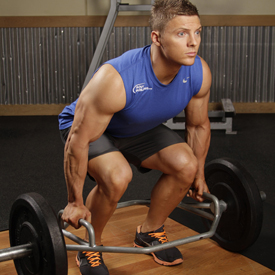
    This is a poor deadlift set-up: note the knees forward of the ankles, the excessive knee bend, and the weight in the midfoot. This is the deadlifting equivalent of overstriding. See, sometimes even the guys in the Bodybuilding.com top can do things wrong
  • Improper movement patterns and muscle imbalances
    Ninety-nine out of 100 runners will suffer from the following: ankle immobility (which can lead to foot pain, heel pain, shin pain, and other dysfunctions up the chain), quad dominance (which can lead to knee pain, low back pain, IT band issues, weak core, and everything that comes with crappy running form and overstriding), underactive lateral stabilizers (which can lead to knee pain, hip pain, foot pain, and sudden injury such as twisted ankles), and underactive core muscles (which can lead to back pain, shoulder pain, knee pain, and generally crappy running form that will cause everything mentioned in this list so far). You’re not going to win against these risks unless you give up everything invented since the stone age, but runners need to take steps to manage these imbalances. Runners need to foam roll, do active stretching techniques (such as a dynamic warm-up), and retrain the neuromuscular system to teach the correct muscles to fire in the correct combinations to manage all of life’s imbalances.

    Does this mean that running is worse for you than deadlifting? Absolutely not. Running uses almost exactly the same muscles as deadlifting in almost exactly the same proportions to each other, and thus a gym rat needs to manage the same issues that runners do: tight hamstrings, tight ankles, protracted shoulders, and gluteal amnesia. If you don’t have the hamstring, hip, shoulder and ankle mobility to reach the bar on the ground and load the right muscles, you’ll get hurt. If you do more weight than your muscles can currently handle, you’ll use the wrong muscles to compensate, and you’ll get hurt. If you lift too often without the proper recovery, you’ll get hurt. It’s the same thing, people!
  • Poor running form
    "It isn't gymnastics or ice-skating, you know." - Emil Zatopek


Whether for the reasons listed above or just because you run like a Muppet, running form (just like deadlift form) needs to be constantly monitored and reworked to find your strongest, most efficient you. I don’t believe that there is one true “correct” running form -- many legendary runners such as Emil Zatopek and Dave Scott have notoriously terrible running form. The trick is finding the most efficient and safe form for your body. 
"Ultramarathon Man" Dean Karnazes overstrides like many ultradistance runners
Dave Scott says himself that he
"runs like a duck"
Emil Zatopek looked "like he'd been
stabbed in the heart" when he ran.
Haile Gebrselassie does
that weird thing with his arms

Crappy form, whether running or lifting, will make you feel like you’re putting out a lot of effort without much result (because you are!), and eventually lead to injury. Most running form can’t be corrected consciously; it’s just too complex a motion that happens too quickly and too many times (up to 120,000 times per hour) for you to consciously override muscle memory, so when a certain hitch starts to develop in our stride, or personal idiosyncrasies start to lead to pain and injury, then you have to manage it. “Management” may mean foam rolling, drills, visualizations (e.g. “running over logs”), or functional strengthening exercises that teach the correct muscles to fire in a certain pattern.

Think that you don’t have to be constantly monitoring and retraining your technique in weightlifting? Of course they do!
  • The wrong shoes
I love hearing people who have no clue what they’re talking about talk about shoes. There are as many answers to, “What’s the best shoe for me?” as there are to, “How do I find my soulmate?” (no pun intended). The answer is different for every individual, and will change over the course of their life and their running career. The answer is to run barefoot, except if you’re one of those people who should be running with mattresses on your feet, unless you’ve always had good luck with a traditional Asics-type running shoe, unless you can handle running in Newtons. And never get a shoe with orthodics or corrective features, unless of course you need orthodics or correction.

Only one thing is for sure: don’t run in ice skates.
Barefoot running is appropriate for a small amount of volume (mostly just drills) for smaller runners of advanced abilities. Run too much in Vibrams or no shoes at all, and you will get a weird gait where your hips and knees never fully extend. Next time you see someone running in Vibrams (and they’re always guys bigger than 200lb, aren’t they?!), you’ll notice that they don’t run heel-to-toe, or toe-to heel, but instead place their entire foot down as one piece, using their knees and hips as the shock absorbers. To reduce the impact, they scoot along with hips and knees always slightly bent and never use the full springing capacity of their glutes and hamstrings, instead relying on the quads (worsening the quad dominance we’ve already touched on).
I’m a fan of zero drop, hard soled shoes but they may not be appropriate for new runners, runners with particularly tight calves and restricted ankle mobility, or those who have been running without injury in the regular Asics-style running shoe for years.

Old school shoes: These may be necessary for heavier runners who need the extra cushioning to handle the heavier load. However, I don’t think they’re the best choice for smaller runners, unless they’ve been running in them for years without injury. For an explanation why, just read Born to Run. Next!
Nike Frees: UGH! I HATE these shoes. Nobody should be running in these shoes. The concept is that they’re supposed to allow your foot to move the way it wants to move, but the soles are TOO flexible. As the uppers stretch out (as they always do on these cheap shoes), your foot slips around in the shoe. And because the sole is made to flex in ways that the human foot does not, the small muscles in your feet work double time to find purchase in your crappy slippery shoes. Nike Frees are a sure path to foot pain, rolled ankles, and maybe even a broken wrist if you try to change directions suddenly when they’re wet.

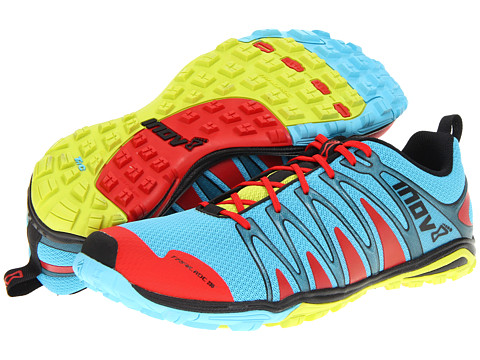
Newtons: I have drunk the Newton Kool-Aid and I am sold. These days I run almost exclusively in them, and only use hard-soled, zero drop shoes like Inov8’s for trail running and to mix it up on recovery runs. They hold up really well to high volume (and I can even wear them without pain long after the time has come to throw them out), and the forefoot lugs do make faster running much more comfortable. However, it took a long time for my achilles tendons to adjust to the strain that an elevated forefoot put on them, and they are less comfortable at a pace slower than 9 min/mi, so I don’t think they’re good for slower runners.

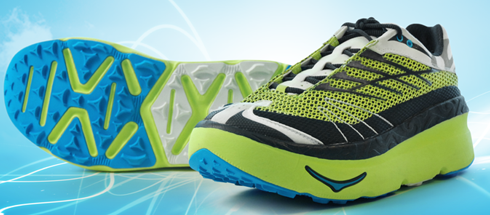
Super fluffy shoes: I went back and forth about these shoes for a long time. On the plus side, the extra padding on shoes like Hokas and Altras reduce the impact through your legs when running ultradistances or when running downhill. On the negative side, having to push off of a softer sole means that your muscles have to work harder to get the same amount of spring in each step, and the extreme squishiness does weird things to your foot’s relationship with the ground. I have a pair of Hokas, and ran a few trail runs with them before I decided that I didn’t like not being able to feel the trail surface underneath me in case it was rocky or technical. Next I tried using them on a 20 mile run,but afterward my legs felt more sore than if I’d run an extra 10 miles, and I resolved never to do that again. Not one to throw out a pair of $160 shoes after only a few runs, I tried wearing them for recovery runs. On the bike trail near my house there is a wooden footbridge that has a little bounce to it. I noticed that running on that foot bridge in my super squishy shoes was doing weird things to my vestibular system, and every time I ran on that bridge in my Hokas I would come home feeling dizzy and nauseous because the strange feedback from my feet to my brain was convincing my vestibular system that I must be dizzy.

  • Not everyone’s made to run
It may not be PC to say, but not everyone’s made to run. If you weigh over about 200lb, it puts so much load on your skeletal system, that it just isn’t the best use of your time to be running more than about 30 miles per week. If you have a severe leg length discrepancy, or some other orthopedic condition or structural issue that interferes, running may not be for you. There are many things that can be fixed and managed, but not everything. Be realistic about your running prospects, and if running really isn’t good for you, then pick something else.

***

Before I sign off, there is one more gigantic load of crap that I would like to address: the idea that oxidative stress of endurance training makes you more susceptible to cancer and some made-up thing called “cardiac fatigue”. I think this is just hogwash. Those pedaling this theory claim that endurance athletes who train at a high level have a lower life expectancy than… someone (soccer players? Olympic lifters? yogis? elephants? I’m not sure how you would isolate out the single variable of “excessive” endurance training). The theory is that all of that extra breathing that comes with burning an extra 1000 calories or so per day creates a higher concentration of free radicals in your body, which causes cell damage, which causes aging, which causes death.

The human body has evolved to deal with the adaptive stress that comes with breathing by eating a diet rich in anti-oxidants, which remove free radicals from the body. Thus, the free radical problem is not a problem with breathing volume, it’s a problem with the proportion of breathing in an endurance athlete’s lifestyle to the number of antioxidants in the standard American diet. And do you really think that the chronic free radical damage can stand up to the biological stress that comes from eating the kind of high protein, high suppelement diet that most serious weightlifters use?

For most of us mortals, pushing yourself to the level of effort that elite athletes can sustain would actually signal imminent death to your brain and cause you to do anything to slow down (e.g. puke, faint, experience extreme pain, poop your pants, breathe fire...). There’s a reason that our brains don’t let us put out the amount of effort that it takes to lift a car off a baby or outrun a mountain lion: because putting out that kind of effort could really fuck you up. You have enough power in your muscles to rip your muscles off your bones or crush your skeleton, and it’s your effort monitor in your brain (what Tim Noakes calls “the central governor”) that protects you from that kind of power output unless it is a matter of life or death. Athletes teach their Central Governors that it is safe to push themselves closer and closer to that limit over a lifetime of training. Do you think that putting out that level of effort day after day is good for you? It is not.

Let’s get one thing clear: training for elite sport is not good for you. I don’t care what the sport is: bodybuilding, running, Strongman, or elite bowling. The low body fat that it takes for many female athletes to perform at the highest level causes you to stop menstruating. That’s not good for you. Having muscles so big that you can’t wipe your own ass: that’s not good for you. Lifting so much weight that your blood pressure skyrockets to heart attack levels, or your tendons might rupture: that’s not good for you! Doing so much yoga that you can scratch your opposite ear with your toe from behind your head: that’s not good for you! As for endurance being worse for you than other forms of exercise, it’s apples and oranges. Wear sunscreen, don’t run next to the freeway, and eat your veggies, and you’ll be fine.

And one more thought for the road. While endurance training may have a greater oxygen demand during the activity, weight training has a far greater oxygen demand AFTER the activity (EPOC), so the oxidative stress of the two types of exercise may not be as drastic as the gym rats may think. So there!

Hrumph.

Next I’ll tackle Myth no. 2: Cardio is not good for weight loss

Friday, January 2, 2015

Resolutions schmezolutions

I normally love watching commercials, but I have no patience for the commercials between Christmas and New Years. It’s the worst time of year for commercials that shamelessly prey on people’s insecurities and try to sell a quick fix. And no, I’m not just bitter because an ASPCA commercial left me a helpless sobbing blob on the couch for 5 minutes. For those of us that actually live a lifestyle that others resolve to have every year (i.e. fit, normal bodyweight, non-smoker, making generally good nutritional choices), we know that none of these quick-fix patches, pills, boxed meals, or subscriptions will fix the real problem: bad habits, and the mind that perpetuates them. As a trainer, I spent 5 years dedicating myself to trying to teach this, and to someone who is not ready, it simply cannot be taught.

There are 3 things I hate about this commercial: 1) the assumption that healthy food can’t taste good, 2) the assumption that you can lose weight without changing a palette accustomed to overly sweet foods, 3) fitness professionals are here to punish you with exercise and shame you for your nutrition decisions.
Oh yeah, and 4) it's FEWER calories. 

I like this one, because it actually suggests that it will address the psychological and behavioral problems that are at the root of your problem. And because it gets that song stuck in my head. 

Most of the New Year’s resolution stuff I have covered: I exercise regularly, am a healthy weight, I get 7-8 hours of sleep a night, and I eat well at least 40% of the time (and when I don’t, I don’t really give a rip because I exercise regularly, so I’m a healthy weight, so back off bitch, I’m starving!). There are times when I’ve really cleaned up my diet and felt great, but after awhile it becomes unsustainable. Sure, it feels great to not need caffeine and have the same alertness without a cup of coffee as I used to have with a cup of coffee. But just as delicious as that feeling of vibrant health, is the delicious feeling of finally satisfying a jones for coffee or a hankering for a piece of cake smothered in frosting. Sometimes a little addiction is nice. Most of the time, I just don’t give enough of a fuck to try to make myself better. I’m 85% okay with the way that I am, and that’s good enough for me. 

I do love a challenge. Every 6 months or so, I decide to do something like go vegan for 21 days, switch to decaf for 2 weeks, or see what happens if I run 30K a day every weekday for 6 weeks. Usually, the positive changes from those challenges carry me through for a little while before I wind up eating a container of Betty Crocker frosting on crackers again (true story).

I was 100% sober in this picture.

After reading two natural food athlete books in a row, I was having that fantasy again; the one where I’m running faster than ever and all distances are effortless, burping up kale as I go. The only time I have ever experienced this feeling is when listening to a book in my car while I sit comfortably on my ass and watch the sidewalk fly by at 45mph. As soon as I put my running shoes back on, I’m back to my actual gait of a depressed water buffalo. Maybe the difference is not that it is easier to listen to someone else recount their experience than to do it yourself; maybe the difference is that I eat too much frosting! Surely, if I replace the frosting in my diet with Kale and spirulina, then I will get that weightless feeling that I get in the car. Yeah! That’s it!

In past years I have gone vegan for the first 3 weeks of the new year, but just because you don’t eat dairy or eggs for 21 days, doesn’t mean that you eat any less processed crap or sugar. And even if you buy into the “Dairy is Dangerous” argument (which I do only half the time): are plain yogurt and free range eggs really more poisonous than a giant wad of processed soy? And is 3 weeks really enough time to make any appreciable change to your body, habits or athletic performance? Could you go from couch to 5K, or 10K to marathon in 3 weeks? Could you lose 20lb or get off diabetes medication in 21 days? 

On the other hand, I am not interested in changing my habits and living a monastic frosting-free existence forever. You wouldn’t train for a marathon indefinitely; if you try to extend your intensity beyond its limits, you will eventually plateau and get burnt out or hurt. I’m just curious to see if a clean diet really can bring you from charging elephant to fleet-footed gazelle… until it’s Cookie Monster season again.

Tuesday, September 10, 2013

Second chances

The American Discovery Trail Marathon didn't turn out the way I had wanted it to, and I had worked too hard and gotten too much faster to accept a 4:15 result. I was vulnerable, frustrated and desperate for a second chance when Claire B posted a link on my Facebook wall for the Ventura Marathon: at sea level, flat, fast, and still before the Boston 2014 cut-off. I knew that I could finish 2 marathons in the same week (The Big Disappointment was on a Monday, and Ventura would be run on a Sunday), but would I be setting myself up for another disappointment? I must have walked over 5 miles in Colorado, so I didn't think that I had pushed my body too hard, but the whole problem was that at 7000 ft, I had no idea how to gauge my efforts. Maybe my body was completely trashed and I just didn't know it. It's not like I was going to get to run a big workout to gauge my fatigue. But then again, I would be coming back from 8 days at altitude, which I figured had to count for something. The deciding factor was that I had nothing to lose. It couldn't be worse than another 4:15 finish.


I'm going to take a moment here to express my thanks to my wonderful, patient, long-suffering, supportive girlfriend/fiancée/co-pilot/support crew/chauffeur/massager of sore muscles, who I will give the pseudonym of Richie Porte after the world's most selfless domestique. Richie Porte moved her scheduled vacation so that we could be in Colorado exactly the week I would need to be for the race. She then suffered through a sprained toe, a bogus speeding ticket (and the retainer for a lawyer), inhumane customer service, lost (and found) designer sunglasses, and ham in her vegetarian entre, in addition to my griping about not drinking coffee, griping about not eating pizza and ice cream, and impossible dietary restrictions in the week before my big race. And when all that was over and all of our efforts had come to naught, when I looked up from my iPhone in Colorado Springs and said, "There's a race in Ventura next weekend..." she didn't miss a beat. She said, "Do you want to do it? We could drive down Saturday and come back on Sunday..."

I am the luckiest self-absorbed endurance athlete in the world.

And so it was that after sleeping only 3 nights in our own bed, Richie Porte found herself driving me 5 hours down to Ventura on a Saturday morning to check in to yet another hotel and wake up at 4am to spend another boring morning watching another stupid marathon. I chattered on in the passenger seat about my race plan (or lack thereof). "I have no idea how this is going to turn out. If I'm not there at 3:30, don't be worried. Actually, if I finish at 3:40 I'll be totally stoked. Actually... if you haven't seen me by 3:50 I want you to walk backwards up the course because if I haven't finished by then, then I'll really want to see you in the final miles because that means I fell apart. Actually... will you be seeing me somewhere in the middle? Last time I was sad that I didn't see you at mile 20 but it was just because I was having a bad race and... maybe it would be better if I saw you before the turn-around and I can tell you how it's going so you won't have to wait so long at the finish line. Or..." ...and so on until she really should have wanted to slap me in the face.

After some minor parking drama at packet pick-up, it was on to the hotel in Oxnard: the kind of place that shares a parking lot with Denny's and where dangerous-looking addicts glare out of dark hotel rooms with open doors and you wonder if you'll get shot at night walking to the ice machine. I busted out my homemade high-carb dinner while Richie Porte ate some Mexican take-out and then I promptly took a Unisom and passed out. So I missed the mariachi music that someone played in the parking lot all night, and Richie Porte had to fill me in on it the next morning (no Unisom to help her sleep). At 4:15 I woke up and sat on the hotel floor eating oatmeal (a lighter breakfast than last time) and waiting for my poop to cook. This time, it dinged in time and I put on my race outfit feeling ready to rock and roll. Then, beet juice, Starbucks, and back to the Ventura pier with enough time to wait in multiple porta-pottie lines if necessary.

Maybe the best thing about the Ventura Marathon was the bathrooms: there were so many that there was never a line, there was always toilet paper and hand sanitizer, and they didn't even start to smell. I think I pee'd 4 times before the race started, just because I could. I knew I should have warmed up a bit before the start, but it just didn't seem worth the extra energy expenditure so I just kind of bounced a lot.

I lined up with the 3:35 pacer and bounced and wiggled through the national anthem. I didn't plan to sacrifice myself by hanging on the pacer's shoulder for as long as I could this time, I just figured it would be a good place to wait out the nervous first few miles when pacing yourself can be so disorienting. The pacer didn't inspire much confidence. He wasn't much taller than I was, with a stocky build and the race had dressed him in this god-awful bright pink shirt. I would not allow myself to be paced through a marathon by someone in a pink shirt, even if he was a man.

When I'm suffering, you can see it on my face. In
this picture, I was suffering. In Ventura, I was relaxed.
The race started, and I held myself back and stood next to the pacer and started counting steps and breaths. When I had counted to 100, I looked down at my watch and saw that we were running an 8:13 pace. Stupid pacer, you're ruining it! I thought, and I let myself drift on ahead. Right from the starting line, and up through the 24th mile, I paced myself by making sure that every breath equaled 8 steps (4 in, 4 out), and every 100 breaths I would look down at my watch and make sure that I was still on pace (faster than 7:45, then I should slow down, slower than 8:00, then I should pick it up a bit, and make sure that the average pace stayed below 8:00, or 8:12 if things were going badly). Soon I fell in pace with a group that was running on pace with my breathing and stepping. Around mile 5 one guy turned to another and asked, "Are you shooting for 3:20/3:25-ish?"

"Uh oh," I said out loud. But I had been pacing conservatively by feel, not by my watch, and I felt so good! A the 6-mile aid station I stopped to refill my water bottle, and kept them at a steady 50 meters ahead of me, until I refilled again at the 12-mile aid station and fell 100 meters behind. Right before the turn-around, I saw Richie Porte and the dog waiting for me with a big smile on both their faces.

"You're on pace!" Richie Porte yelled.
"And I feel good, for now!" I said. "Who knows what's going to happen in the next 14 miles, though." Secretly, around mile 11 I had started to feel things that may or may not turn out to be a big deal later on. My hamstrings felt tired, and a new painful spot that had appeared in my left foot two days earlier was tingling and going numb. I consciously made myself let my pace bunnies get away and settled back a bit to let my body relax.

My splits for the first half marathon tell the story of a comfortable pace:

  1. 7:56
  2. 7:50
  3. 7:42 (uh oh, that one was too fast, should probably slow it down)
  4. 7:52
  5. 7:50
  6. 7:55
  7. 7:54
  8. 7:54
  9. 7:55
  10. 8:03
  11. 8:01
  12. 8:08
  13. 8:07
The turn-around involved running around endless cones and through a parking lot before turning back and running back the way I'd come. While running the figure eight, I recognized a familiar face: a client that I'd done a few sessions with months ago. I shouted his name and we managed to get a quick, "Good to see you, what time are you shooting for, good luck!" conversation shouted across the street before we each ran our separate directions (I was ahead of him, for the record!). As I settled back into my counting, I realized that the excitement had nudged my pace too high and the shouting had robbed me of precious oxygen. I tried to settle back into my 4-in-4-out rhythm, but now suddenly all of the wind had been taken out of my sails. 

When I crossed with Richie Porte again a mile later, she and the dog came out and ran with me for 100 yards. "I don't know what happened. I turned around and all of a sudden, it's like I have completely different legs!" I complained. 
"It's okay, just run your race," she said. "I'll see you at the finish whenever you get there." 
"Are we running uphill or something?" I asked.
"Ummmm... no." But it felt just like a false flat where the road looks level, yet every step seems to take 2% more effort and you're inexplicably slowing down. I had turned into the wind, but could a 5mph wind really make that much of a difference? I tried to calm down and find my 4:1 rhythm.

This picture, taken at mile *5* of the SF
marathon gives you an idea of how much
sweating is a problem for me: note, shorts
are also plastered to my legs.
I had been reading some interesting theories about race nutrition lately, including Matt Fitzgerald's theory that your race performance is only limited by the amount of carbohydrate you can ingest in a marathon, and also an interesting theory put forth by Fitzgerald and Tim Noakes that we didn't need much, if any, fluids during a race. (It bothered me that these theories contradicted each other, since carbohydrate must be ingested with a certain amount of fluid to be absorbed properly. This is probably the only Fitzgerald book I don't recommend.) I had been experimenting with different amounts of fluid intake during my runs and found that far from needing less fluid, hydration and electrolytes in particular seemed to present the biggest "wall" on my long runs, not carbohydrate. After a few experimental "low-fluid" runs, I had gotten so desperately dehydrated that it had taken me weeks to catch back up and I was seriously worried about my body's ability to absorb enough fluid to keep up with my daily sweat rates. In other words, I am one sweaty motherfucker. I can't run on the treadmill for more than 10 miles without getting off to change because after an hour and twenty minutes, I have sweat completely through my shorts, the sweat has run unmitigated down my legs to soak my socks, and soon after the uppers of my shoes, after which point it soaks the soles of my shoes and I start slipping on the treadmill belt. I had had a come-to-Jesus moment a few years before in a 50K when salt tabs had led me to the strongest finish I had ever had in a race longer than 13 miles. Ventura on this morning was cool (in the mid-60's), but foggy. A marathon in the same conditions in San Francisco had flattened me 2 years earlier when I hit the electrolyte wall at mile 12. 

After much agonizing, I had decided to run with a water bottle rather than just drinking at aid stations, and now I was glad for it. I used the water to slosh down twice as many electrolyte pills (2 every 3 miles instead of every 7), as well as a Honey Stinger gummy chew at every single mile marker. I didn't notice a difference with the gummies, but every time I took a pill, I felt a little better for a few minutes and was able to pick up my pace again until just as suddenly I would hit another wall. I tried taking even more electrolyte tabs, but a sharp cramp in my stomach told me to quit that bullshit pretty quick. At this point, the damage had been done, and everything that I could shove in my face was only going to delay the inevitable, it wasn't going to bring me back from the dead. 

The next seven miles told the story of a slow, insidious death rather than a dramatic explosion. 
14. 8:07
15. 8:15
16. 8:18
17. 8:22
18. 8:32
19. 8:41
20. 8:40

By the time the little guy in the pink shirt carrying the 3:30 banner had passed me around mile 18, my pace had deteriorated too much to catch back on to his pace. At the moment he passed me I looked down at my watch; the average pace that had brought us both to that exact spot in that moment in time was 8:00 miles. Damn! I thought as he passed and I stared at his back for awhile. If I could keep my average pace under 8:12 for the next 10K, then I could still break 3:35, but as my gas needle dropped down to E, I knew that I was going to deteriorate faster than that. 

It's funny. For years I always imagined that if I got to this point, where something phenomenal like a miracle Boston Qualification were within my reach, I thought I would dig deep and find something special inside to force myself over that finish line if it killed me. But the body can only go as fast as it will go, and now my breathing was ragged and getting more and more labored, even as my pace slowed down. I remember thinking, This is exactly how hard I breathe in a 10K race, only now I'm not running 7:15 miles, I'm running 9:15's. I've never felt this before, being this out of breath so late in a race. I'm falling apart, but I'm still running hard. This must mean that I'm doing something right. A few miles later when the 3:35 was well out of range and all I wanted to do was walk for a few sweet seconds, I took solace in the fact that as dismal as this pace was, I was still racing in my own pathetic little way. 

The final miles show a body that is in distress, but not completely breaking down. 
21. 8:43
22. 9:02 I tried drinking Gatorade somewhere through this mile. It was the most vile thing I'd ever tasted, and I was glad again for my water bottle. 
23. 9:12 Here I dropped my second-to-last gummy on the ground, and managed to get the last one in my mouth. As I watched the gummy bounce on the ground, I decided that carbohydrates too were important. I lamented that gummy for the next 2 miles.
24. 9:27 Here I finally stopped counting steps and instead reminded myself over and over, "Just stay alive..." (Note: This my slowest mile was the only mile slower than my average pace in Colorado.)
25. 9:09 My water bottle empty again, I decided to throw it to the side of the road and lighten my load. I knew that my goal was out of my reach, but no one could take a PR away from me now. After slinging the bottle into someone's yard, I looked up to see a cop directing traffic 20 feet away. "Thanks for coming out," I said sheepishly. "Keep it up," he said. Phew!
26. 9:06 Please finish respectably, please finish respectably, please finish respectably...

In those last delirious .2 miles I spotted Richie Porte in the crowd. "You're gonna break 3:40!" she yelled. 

"I missed my goal time, but I don't give a flying fuck!!! I did it!" I screamed, not caring how many children were in the crowd. The crowd started cheering louder for me. The biggest sprint I could muster for that last quarter mile was 8:25 pace and I stumbled over the line more thrilled than if everything had worked out to plan. I had run a 3:38:44 in spite of everything, dropping my official PR by 19 min and even beating my unofficial PR by 4 and a half minutes.

True, I had fallen short once again of completing a Boston Qualifying time, but I have never actually cared about running Boston, because I already have. But for all these years it has been eating at me that I cheated by running Boston as a bandit, and that no matter how hard I tried, I didn't seem to be able to get anywhere close to a qualifying time. Until this summer, it seemed just as likely that I would run a BQ as that I would make the NBA draft. Now I knew that had my legs been fresh, I could have pulled out those last 4 minutes. Moreover, since I had gatecrashed Boston in 2008, the qualifying standard at the time had been 3:40, which I had finally broken. In that moment it was enough for me. I nearly broke down crying.

I asked the chip-cutter-offer if I could sit in his chair so that I wouldn't throw up on him, and when I finally got myself out of the finishing area, there was Richie Porte and a very overstimulated dog there to hug me in all of my slimy, sweaty, nastiness. Once I sat on the curb, my quad started to cramp. I said, "AAAHHHH, my quad is cramping up! My quad is cramping! AAAAAHHHHHH! This has never happened to me before!!! OUCH! OUCH! OUCH!" Just like a grown-up person would yell. Richie Porte pulled me back to standing and pushed me over toward the food table. Food ingested, we found our way to an indoor handicapped bathroom where she untied my shoes (which I couldn't reach), helped me pull off my shorts (which I could barely reach), and I rested my arms on her shoulders as she pulled off my sports bra since I couldn't lift my arms above my head without my shoulders cramping up. Then she gently re-dressed me in fresh clothes and led me back to the car, where we would soon be sitting on the 5-hour ride back to the Bay Area without my taking a shower. I'm telling you, I'm the luckiest stinky person out there. 

On the drive back, I slowly came back to life. My stomach went through periods of violent cramping and nausea while I alternately forced down the water that I knew I needed and the coffee that I insisted that I still wanted because I had earned it. It took me hours to pee again, and when I did, the beet juice came out darker than it had gone in. That was the most exciting part for me, and I wanted nothing more than to not flush in a gas station toilet, and then hide outside the bathroom to spy on people's reactions. But sometimes in life you don't get everything you want, even though you worked REALLY hard for it and it would make you really happy. Sometimes you have to settle for the satisfaction of knowing yourself what you've done, and that not everybody is going to understand why you're so proud of yourself. So I flushed the beet pee, and we drove on home. 


Thursday, September 5, 2013

Different story, same result


Why this should have been the best marathon of my life:
I did my first marathon in 2004, and ever since then I have had grandiose dreams of getting faster. Grandiose dreams and lots of training plans, that is, but I'm never as excited to lace up my shoes as I am to hit the road. After the first 4 weeks before I lose interest and move on to the "whatever the fuck I feel like doing today," training plan. But this time I trained for an entire summer for this marathon alone. I also made a huge jump in volume, going from about 35 miles per week to 90 miles per week in my base phase (although I wasn't thinking of it that way at the time).

In my youth I used to shout to anyone who would listen about how I was a high-volume athlete, and how I always got faster when I was overtrained. Then I got older, life took me down a few pegs, and I tried the lower volume version of "whatever the fuck I feel like doing today (the 1 hour or less edition)." I found that I was able to run a 4:15 marathon on a standard marathon training program (Boston 2008), running only when I felt like it (San Francisco 2011), or absolutely no running whatsoever (Sugarloaf 2010), so I figured my 3:57 PR would probably stand for life.

I was as amazed as anyone else to find that running 18 miles a day was making me faster – MUCH faster. Running 35 miles per week, my 10K PR had been 51 minutes (8:13 pace), and I had never quite broken the 24-minute barrier for a 5K. I ran 3 10K's in preparation for this marathon: at about 46:30 (7:30-ish pace), 45:30 (7:17 pace), and 44:30 (7:07 pace). In the second of those three races, I ran my first mile in 6:13, and still continued on to a then-PR by holding a pace in the mid-7's, when the previous fastest mile I had EVER run under ANY conditions had been 7:00. I had hopes and beliefs in myself as a runner that I never thought possible. For once, I was seeing results.

I am someone who loves to try to predict the future with graphs and formulae, and so I have a Jack Daniels VDOT calculator on my phone that I check almost daily, and my projected marathon finish time from actual results was dropping nearly every other week. When I ran the prescribed paces, for once I was actually able to complete all my workouts to specs. Adding to my confidence, any speed workout I did on the treadmill, I did at a 1% incline just to make sure I wasn't cheating, and I still hit all my numbers. Where I hadn't been able to run a 5K at 8-minute pace in the past, 2 weeks before my marathon I nailed a 26.2 kilometer race simulation at 8-minute pace, 1% incline. I know it is foolish to believe too much in these tables, especially for the longer distances where fatigue can have the greatest effect, but I had run 18 miles a day for 30 days, and all of my speed work had been slow marathon speed work, so my marathon was sure to be even BETTER than my 10K performances, right?

This was going to be my year.

The race I chose was the American Discovery Trail marathon in Colorado Springs. Most of the marathon would be on a dirt path, which I hoped would cut down on the cumulative fatigue of pounding on pavement (which is what makes a marathon so much harder than a 50K, for me anyway). It started at 7000 ft elevation, but I hoped the 1300ft net drop and average negative 1% decline would make up for the altitude difference, right? And I had been training at 1% incline on the treadmill, so that would be my insurance policy, right? (When I say, "Right?" you should shake your head solemnly.)

Doing everything right
This was going to be my year, and this time I was going to do everything right. I showed up at altitude 5 days ahead of time to get acclimated to the elevation. I learned the best way to fat load before carbo-loading, and then carbo-loaded as best I could at restaurants for the last 2 days. I drank 7 to 10 liters of fluid per day for a week to make sure that my chronically dehydrated body could finally catch up on fluids. I walked around with my own shaker of low-sodium Himalayan sea salt and shook it in my water and food for 4 days (more minerals than regular salt, and ionization that improves absorption). I picked foods based on what had the highest potassium concentration. I ate chia seeds by the spoonful before chugging tons of coconut water because chia seeds slow fluids' emptying from the stomach. I cut caffeine completely out 8 days before the race so that it would have the maximum effect on my endurance on race day.

This next section will be all about poop
So now you have the back story, and all of ingredients that led to my demise. If you have been reading my blog for a long time, then you know that A) I am a very shy pooper, and B) my GI tract quits before my lungs and legs every single time. In a good week at home I might only go number 2 three to four times in seven days. I had been on the road for nearly a week, eating unfamiliar foods, using unfamiliar bathrooms, and not drinking coffee. By the time I went to bed the night before the race, I had a week's worth of fatty restaurant fare foods backed up in there refusing to come out. My GI tract, and not so much my race strategy was what kept me up half the night before the race with worry. Would I get it out in time, or would I be running with this extra baggage?

I woke up at 4:15 and finally had what I had been waiting for for over a week... No, not the poop, the coffee. But the coffee did help me "break the seal" so to speak on my other week-long poop abstinence. I had eggs on toast, which has been my breakfast of champions since the years of know-it-all youth, even though it has felt pretty heavy for me lately, now that I'm a "fast" runner. I downed some last-minute coconut milk with chia seeds in it to help me hold on to some last-minute hydration and electrolytes. After 5:30 (1 hour before start time), I didn't take in a single sip and waited for what I was sure was going to be the best crap of my life to marinate.

In the car, I finished the last of my pre-race fluids (a bottle of beet juice: don't ask, it works), and finally felt the timer on my poop-cooker ding. Finally! But as we pulled up to the race start, so did a bus, which evacuated a couple dozen runners from its own bowels and deposited them right in front of me in the porta-pottie line. Each line fed 2 porta-potties, and I was about 20 runners back from the long-awaited completion of my last pre-race preparation. As I waited and waited, I could feel my bowels losing interest. 'No! No! Just a little longer,' I begged them. But then, with only about 5 people in front of me, the worst thing that could happen happened. A man went into a porta-pottie, and did not come back out. I watched his door stay closed for over 5 minutes (I know because when it had been a long time and he still hadn't come out, I started my stopwatch), while the other porta-pottie had to deal with the rest of the demand. When I finally got to go to the bathroom, a sad, dry little turd from the Jurassic period was all that was left to me, while the rest had crawled back into its den to ride along for my whole race. With the way the lines were, there would be no second chances this morning.

While I had been waiting for the bathroom, I scoped out the other runners. This crowd looked more like the start of an ultra than a regular marathon: I spotted no "chunky" runners. Rather than Team in Training jerseys, I saw race t-shirts from a surprising number of 50- and 100-mile ultras. Rather than "supportive" Asics shoes, I saw Hokas, Newtons, and other signs of a more advanced crowd. But I belonged here, right?

A Website really should warn you about these things...
I found the 3:30 pacer, and he pulled us off to the side to explain our strategy. "Alright, folks. This race is downhill, but it's not easy. The first 9 miles are going to be the steepest down, so I'm going to be running a bit faster than pace to pick up some time before the hills..."

'Wait a second! I hadn't trained to run FASTER than 8-minute pace at altitude. The downhill was supposed to take care of any gaps created by the altitude. And HILLS?! What hills?'

"...Then, once we reach the air force base, it's all rolling for the next 9 miles, so we're going to be going through those rollers right at 3:30 pace. Try to stay with me. They're not tall, only about 30 or 40 feet each, but they're steep..."

This was where I knew I was fucked. Hills that were only 30 feet tall wouldn't show up on a 26-mile elevation profile, but I had learned from my final training runs this past week in Boulder that even the slightest hill could have me doubled over just to maintain a 10-minute mile.

"...Then, the last 8 miles are pretty flat right on to the finish. I suggest you run in front of me if you want to keep your pace. Good luck! Let's have a great run!"

The guy next to me was a chatty type. "This race is usually cold at the start. Some mornings you can see your breath and you're shivering before you get running."

"You've done this race before?!" I asked. "Where are you from?" I forget where he was from, but it was at sea level. "How much slower would you say this marathon is than a sea level race?"

"I'd say 15-20 minutes. Those hills aren't tall, but they're steep. That's why I'm with the pacer, I usually run about a 3:15."

Right then was when I knew that this would not be my day. I had pulled another rookie mistake, and underestimated the altitude. But I was not the only one. This gentleman would be among the rest of the walking dead who would stumble home long after the 4-hour mark had come and gone. I wanted to go get back in the car get more coffee, bring it back to the hotel, and read a good book. This was a waste of time.

After finishing, I found a forum thread that I should have looked at months ago. It said that at 7000 feet, there is 25% less oxygen than at sea level. Running at 5000 feet you can expect to add 10s to your mile time, 50 seconds to a 5K, and 2 minutes to a 10K, and expect more deterioration for longer events. Other runners suggested expecting a 10% decline in performance. But I didn't know any of that yet. 

The Race

We began running and I felt good running with the pace group. I felt like I had enough air, and the rhythm felt fine. I felt good running that 6:13 mile at the beginning of that one 10K too... until all of a sudden I didn't. If running at altitude is about 10% harder, than maintaining this 8-minute pace was the aerobic equivalent of running at 7:20 pace. But how could I know that? at the moment I felt good and had no objective way of knowing that the shit was about to hit the fan.

We couldn't have been more than a mile in before my stomach started acting up and my bowels let me know they were finally ready. I knew from experience that this could only end one of two ways: I would either slow down considerably and feel sick for the rest of my race, or I would feel sick until my body finally gave up and I started puking my guts out. I made it to between 3 and 4 miles, and then I ducked into a porta-pottie and let the pace team go, and my 3:30 goal for good. However, the phantom poo had struck again, and I struck out in that first porta-pottie.

I ran until half way through mile 9 by myself, in the no-man's land that lies right after a pacer where only the flotsam and detritus of the race – those runners who took it out too fast – languish in their own world of pain way earlier than it is appropriate to be in that much pain. But nobody falls apart at mile 4; nobody but me so I was alone. I floated along, maintaining an average pace of about 8:18 per mile, unable to eat or drink as my poop went thunk-thunk-thunking in my intestines like the last tennis ball in a tube. At least I didn't feel like my bowels had turned to liquid anymore, I just couldn't eat or drink.

At mile 9 I had gotten my hopes up again for some relief, and ducked into another toilet. I let out a fart that felt like came from as high as my shoulders, but there was no ammunition behind it. Now even further behind and more discouraged, I stumbled back out onto the course to face the hills with my whole body feeling like it was made of lead. By this point, I could barely feel my body. I wasn't in any pain, I just had that out-of-body sensation you have when you've got a bad cold and you've taken too much medicine. Nothing hurt, my breathing wasn't labored, but every cell in my body was urging me to lay down and stop. Running 18 miles a day, I had gotten very good at continuing to push through all levels of fatigue, but this was different. I just couldn't will myself on. When the 3:40 pace group caught up with me, I was moving so slow that I had to stop and walk while they passed or else the disorientation of being left behind by the tide of so many people at once would have been enough to knock me over. Eventually, around mile 13 I felt a stabbing sensation in three places in my stomach, just like a side stitch. I let out a moan and gave up on finishing this thing running. I walked until the pain subsided, and then resumed plodding along at a jog until the pain was back.

All through the 9 miles of hills, I felt like the walking dead. I couldn't run up the hills, but sometimes I couldn't run down them either. I was unable to respond to the cheers from spectators and encouragement from runners around me. Even in my worst moments, even when I'm puking or I can't breathe I can pluck up a sarcastic comment, a wave, or a grunt. This time I couldn't even lift a finger in acknowledgement, and the race was barely half way over. And yet, my legs didn't hurt. My whole body felt like NOTHING.

After mile 18 I was walking so much that I had given up even running in a 1-to-1 ratio. I counted 100 paces, then would make a decision as to whether I could keep running or not. I never made it past 300 paces, and would need several minutes afterward to recover. A few weeks before I had started marathon training, I had done a 50K where I ran up 9 straight miles of hills on the 100-pace-plan, never once stopping to walk. If there was one mercy in this race, it was that my GPS had stopped during one of my porta-pottie stops, and I didn't know or care how far behind pace I was. And at least I held off the 4-hour pacer for 30K, that was something to be proud of, right?

You would think that if I had held off the 4-hour pace crew (9-minute miles) for 18 or 20 miles, then I would still mostly be surrounded by people running at that point, but all of those around me seemed to be in the same slow boat to hell that I was. I met two runners who claimed to be 3:20 marathoners, and passed them both. I talked to a college student from Boulder who said she couldn't feel one of her feet. I watched one girl climb up from all fours onto wobbly Julie Moss legs and stumble drunkenly on at mile 24. I saw a man white as a sheet completely unconscious in a ditch while a medic on a bike worked on him. Absolutely everybody that I talked to had a story about how their day had gone horribly wrong. For some it was the heat, others blamed it on the altitude, while others blamed the deep soft dirt that they had lain only a few days before after the trail had been washed away in last week's flash floods. ("Hey, I didn't know we had a beach in Colorado!")

Normally I have very vivid memories of the sequence of my races, but this race featured neither vivid pain, nor crystal-clear impressions of the course. In my mind, I only have isolated snapshots, and when I crossed the finish line I remember feeling exhausted without really feeling like I'd pushed at all. I crossed the finish line in 4:12, and then sat on the ground, dazed. I had finished in the same time as my last 2 marathons official marathons: Sugarloaf in 2010 after not running a step in over a year and a half, and I had run San Francisco in 2011 without running more than 3 or 4 miles in the year and a half that had passed since Sugarloaf. How could this happen?! I had run a 3:42 on the track only a few months before with no aid stations, pacers, or expectations. I could think of no explanation for my terrible performance but the altitude and (whispered: constipation).

Oh well. Another A race. Another race report about choking.