Way back in the day in 2003, I got into exercise because of a break-up. Back then my eating was like something out of a Lifetime Original movie, and I still thought that being depressed and “tortured” made me interesting and deep. I was seeing an older girl who treated me like crap, and I was absolutely head-over-heals for her, partly because I liked being treated like crap back then. She dumped me and I literally thought I’d explode with grief, so I decided to go to the gym and kick the shit out of myself until I felt like I could sit still again. It worked for a few hours, so I went back the next day, and the next. I forbade myself to diet or let myself get down until I had reached a point where I didn’t feel like I was going to hurl myself in front of a train. Between the working out and hours spent drinking and journaling every night, somehow I managed to come out of that year that we spent breaking up and not getting back together with a positive outlook on life.. and a drinking problem.
My next break-up was resolved with working out as well. This relationship was even more dysfunctional than the last, mostly because the girlfriend in question was a certifiable psychopath. I was on one of my sober kicks when I met her, and she purposely got me drinking again, then she systematically went through and shit on everything that I liked about myself. By the time I left, I was at the point where my organs were beginning to show signs of damage, along with my self-worth. I had to leave the country (Spain) and start life over again to get away from her and my drinking problem, but again it was exercise that got me through it. Figuring out how to live sober was the hardest thing I've ever done. When I didn’t know how to make a decision, I made the decision that would make me least likely to drink. So this meant racing on weekends rather than going to bars, and making new friends who valued that kind of behavior. So what if half of them were 20 years older than me?! At least they didn't see anything wrong with going to bed at 9:00.
So this time around, when from one moment to the next my life came down around me, I thought I knew what to do. I sent an SOS to my coach and said we needed to do a crash week, now, or else I was going to crawl into a bottle and die. (A crash week is where you do tons of volume and tear yourself to shreds to try to take your training to the next level.) He responded by giving me about 24 hours of training for the week, with no workout being shorter than 3 hours. (I have come to adore him now that we’re focusing on cycling, and he’s been great with all my requests and inquiries).
But for once, the more I ride, the worse I feel. My first 4-hour ride was a trainer affair, and by the time I got to the end of it I was spitting mad. Literally, I had gotten myself so angry by the time that I got off the bike that I actually spit on the ground (on my sweat towel). I mean really, who even spits to show disdain??? It's so 1920. My next ride was a 4-hour outdoor romp with about 15 seconds of maximum force intervals every five minutes. I was despondent the whole ride, and hardly cared to put any effort into the pedals. By the time I reached the 7-mile stretch back home I had gotten so desperately crushed again that although I time trialed like the wind the whole way home, there was no joy in it and my heaving breath sounded more like sobbing than gasping.
The third day was the worst of all. They’d been forecasting snow almost every day for the past week, but it had yet to actually snow. So even though they were forecasting flurries, I decided to do my three-hour ride outdoors anyway. Big mistake. The flurries that began as soon as I walked out the door quickly turned to squalls of big fat flakes that melted into big fat drops when they landed on me. The squalls gave way to sleet and freezing rain. I couldn’t feel my fingers to shift. I couldn’t make my legs push into the pedals because they were so cold. It was near freezing, and I was soaked to the bone. And there was an icy wind. I don’t know if I’d ever been so miserable in my life. Normally such conditions would have made me feel at least a little hard core, but right now I just felt like a total loser. I didn’t even give myself the indulgence of telling myself I deserved it. I tore through red lights half hoping that someone would hit me. The next couple of rides were trainer deals. I used up all my Netflix DVD’s on Thursday’s workout, so Friday I was stuck with only music and a white wall to get me through the 2 hours I could fit in before work. But my headphones weren’t working… It turned out not to be a problem. I had so much thinking to do, and each thought exploded into a thousand other reasons to be angry or depressed that the two hours passed quickly, even though all I was doing was staring at a blank wall.
I keep thinking that this can’t really be it, because there’s no way that people who love each other can willingly cause so much pain to each other. But as I always do when my heart is broken, I find my way back to sad break-up songs, and the fact that so many sad, sad songs resonate with me right now means that people who love each other DO do this to each other, or else how could they write such poignant songs about it? And the worst part is that since none of the singers I’ve been listening to are dead, I’m going to have to survive this.
But it hasn’t been all bad. Surprisingly, the times when I feel best are when I’m at the house (OUR house: the house she tried to kick me out of). I haven’t rented a room/house since December of 2006, I’ve just been living in someone else’s space. So when Grease Monkey tried to tell me that I had to go, even though I was crushed and would have done anything to make her change her mind, I had to draw the line there. This was MY house, and goddammit, she had no right to kick me out of it. So I've been busying myself with carving out my own space.
I am not an organized person (not with physical space anyway). I could live in a cave, and as long as it had internet and cable I wouldn’t really notice the bat guano. My ability to survive in filth has been a point of contention in this whole situation, so as I build myself a new bat cave, I’ve been making it a point to pick up after myself. Once I had a bed, I started making it every morning. I’ve started doing laundry before wayward socks get so flattened into the carpet that they look like part of the pattern. I’ve been wiping down counters and emptying the dishwasher. I’ve been hanging up jackets rather than throwing them in a puddle on the floor wherever they happen to come off. And of all things, tidying up is what is making me feel most human again.
Friday when I came home from work, it was in the high-40’s and still sunny. I still had an hour left of my three-hour assignment for the day, but I knew I would miss the sunlight if I had to drag my bike out. Instead I dug out my Nike Frees (which were buried under a giant pile of laundry in my pig sty at my parents’ house), commandeered Grease Monkey’s dog (who had been cooped up in the house all day), and hit the road. We live a block from a lovely little pond with footpaths and trails around it. It’s been one of my favorite running routes since high school, and it’s best run at sunset. Dragging the dog behind me, I ran one loop of the lake. It was nice not to be chained to a machine and just putting one foot in front of the other. There was no pressure to run fast or to hurry the dog along when she took the world’s longest pee. It was just like last summer when Grease Monkey still loved me and I used to take the dog on all my shorter runs. When I got back to within a block of the house, I did something I never do and kept running for another loop. For the first time in a week (or more), I actually felt like I’d done something right.
I've finally made it through my seven day crash week, and tomorrow I get a much-deserved day off. Maybe someday the hurt will be mild enough that I can eradicate it with a ride, but for the time being, maybe solitary arduous activities aren't just what the doctor ordered...
Showing posts with label volume. Show all posts
Showing posts with label volume. Show all posts
Sunday, March 7, 2010

Saturday, October 18, 2008
How to Grow a Pair
 I've been doing some thinking lately about training and what makes some people successful, while others seem to just be running in place (no pun intended). This will probably be a long, rambling post. Feel free to read all or part of it, or none at all. Just a short disclaimer: These are just some thoughts that have been kicking around in my head. I am not trying to portray myself as a coach, nor do I think anyone should actually take me up on some of the things I say unless they are on the same page to begin with. I am not a doctor, or a physiotherapist, or a sports psychologist, nor have I so much as taken a biology class since high school. I used to have a personal training certification, but I even let that expire when I realized that I wasn't a people person (can you tell?). Everything I say in this post is just an opinion based on my own experience and things that I have read/heard or figured out for myself. I am writing this post more to myself than offering advice to anyone else. I'm just posting it because someone out there might be dorky enough to find it interesting. Disagree with me all you want. I encourage you to challenge me. You don't have to care what I think, but since you're here, I'm going to assume that you do.
Introduction
 In the past year, Brett Sutton has been getting a lot of attention for his success his athletes such as Chrissie Wellington, Bella Comerford, Erika Csomor (I LOVE her blog, she's such a space case!), Hillary Biscay, Rebecca Preston... the list goes on. Critics say that he wears his athletes into the ground and doesn't have the long-term in mind. But before Brett Sutton, Simon Lessing was unbeatable for the better part of the '90s because of his balls-out-every-day style of training. Lance Armstrong insists he was so dominant because he was just willing to train harder and more often than anyone else, even in the offseason. I've heard stories of TBB (Brett Sutton's team) athletes having to run marathons on treadmills in barren hallways with no music or air conditioning, run 20 miles worth of 800m repeats, do 10 ironmans in a season, etc. And meanwhile all the tri-geeks in the world will tell you that that kind of training is unnecessary. That you don't have to train like that to be successful. That you need to REST. Training like that will make your legs explode and your arms fall off and your soul get cavities. All I wonder is why so many people are so afraid to train?
I've talked a bit about this before. I think that the people who are successful in this sport, pros and age-groupers alike, are able to compress high-quality rest into very short amounts of time, and that their "off" weeks are still more than many casual ironman athletes train in even their highest training volumes. This post is already long enough. I don't need to repeat it . If you're interested, read about it here. The gist of it is: Harden the eff up and train more.
Among my friends in the blogosphere I've developed quite a reputation for myself for being some sort of crazy endurance nut, eschewing rest in favor of truckloads of masochistic "junk miles". First off, I would like to point out that I do rest. I take days off. I have easy weeks. I just don't write about them because they're boring. Also, I have no life. All the time that I don't spend working or training is dedicated to rest, so I am not spending extra energy chasing after kids, cooking meals, or going out with friends. I pay a lot of attention to nutrition and taking care of my body when I'm not training. I'm lucky to have this type of schedule. This is a choice I have made, your choices may have been different. We all work within the parameters of our own lives and our own limits. I'm also a dork and many people wouldn't WANT my lifestyle, but I think this lifestyle means that I am able to maintain higher training volumes than other working athletes. Maybe not more than you, dear reader, but more than many.
But also, I think that if you pussyfoot around your body, then your body is going to be a pussy. If you go out there and smack yourself every day, then you're going to get the returns you've worked for.
In the past year, Brett Sutton has been getting a lot of attention for his success his athletes such as Chrissie Wellington, Bella Comerford, Erika Csomor (I LOVE her blog, she's such a space case!), Hillary Biscay, Rebecca Preston... the list goes on. Critics say that he wears his athletes into the ground and doesn't have the long-term in mind. But before Brett Sutton, Simon Lessing was unbeatable for the better part of the '90s because of his balls-out-every-day style of training. Lance Armstrong insists he was so dominant because he was just willing to train harder and more often than anyone else, even in the offseason. I've heard stories of TBB (Brett Sutton's team) athletes having to run marathons on treadmills in barren hallways with no music or air conditioning, run 20 miles worth of 800m repeats, do 10 ironmans in a season, etc. And meanwhile all the tri-geeks in the world will tell you that that kind of training is unnecessary. That you don't have to train like that to be successful. That you need to REST. Training like that will make your legs explode and your arms fall off and your soul get cavities. All I wonder is why so many people are so afraid to train?I've talked a bit about this before. I think that the people who are successful in this sport, pros and age-groupers alike, are able to compress high-quality rest into very short amounts of time, and that their "off" weeks are still more than many casual ironman athletes train in even their highest training volumes. This post is already long enough. I don't need to repeat it . If you're interested, read about it here. The gist of it is: Harden the eff up and train more.
Among my friends in the blogosphere I've developed quite a reputation for myself for being some sort of crazy endurance nut, eschewing rest in favor of truckloads of masochistic "junk miles". First off, I would like to point out that I do rest. I take days off. I have easy weeks. I just don't write about them because they're boring. Also, I have no life. All the time that I don't spend working or training is dedicated to rest, so I am not spending extra energy chasing after kids, cooking meals, or going out with friends. I pay a lot of attention to nutrition and taking care of my body when I'm not training. I'm lucky to have this type of schedule. This is a choice I have made, your choices may have been different. We all work within the parameters of our own lives and our own limits. I'm also a dork and many people wouldn't WANT my lifestyle, but I think this lifestyle means that I am able to maintain higher training volumes than other working athletes. Maybe not more than you, dear reader, but more than many.
But also, I think that if you pussyfoot around your body, then your body is going to be a pussy. If you go out there and smack yourself every day, then you're going to get the returns you've worked for.
Supercompensation: Don't Be a Pussy
Even if you don't know it by that name, you know about supercompensation. It is the basic principle behind training. Every kind of training that you do breaks down your body in some way. You put tiny little tears into your muscles and ligaments, you burst red blood cells, you put tiny little cracks in your bones, you deplete your cells of all the stuff they need to survive, and kill lots and lots of cells all over your whole body in the process. It wears out your immune system. After an especially hard day you aren't even able to complete such daily tasks as walking across a parking lot without extreme pain. Essentially, exercising makes you sick. It fucks you up. It leaves you worse off than you were before.
 But then you rest. Your body says, "I never, ever want to feel like that again. So next time he/she throws that shit at me, I'd better be ready." (Maybe your body doesn't have a pottymouth — mine does). So the body builds itself up to be stronger so that it can handle greater loads. Next time you do the same workout, your body is more prepared, and doesn't get as beat up as before. This is the "training response". We all know about it. This is why people won't shut up about the importance of rest, and "rest is when you grow stronger," and all that crap. You already knew that.
But if you're going to get better from it, and your body is going to overcompensate for everything that you do, why not fuck it up as much as possible before you send it in to the shop to get fixed? Why take it easy after every, single hard workout when you could cram in 3 or 4 hard sessions and absolutely thrash yourself before you lay off and let your body do its thing? If you're still ABLE to do quality training, there is no reason to lay off like a pansy after every single hard day. You can handle it. Really. And if you can't handle it this time around, keep at it and soon you WILL be able to handle it. If you never do long strings of hard workouts, then your body will never adapt to them, and you will be missing countless opportunities to put "money in the bank" as they say. You just won't be as fit as you could be.
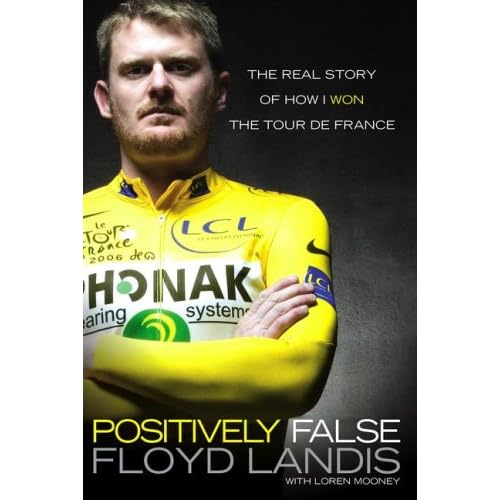 I read Floyd Landis's book Positively False: The Real Story of How I Won the Tour de France a couple of months ago. Even if you don't want the guy bending your ear insisting on his innocence, the first half is a great cycling book. Even when he was a kid, Landis was the poster child for high volume. He talks about how, in his preparation for the 2006 Tour a doctor friend of his (I wish I could remember the name -- I think I do, but at the risk of being wrong I won't say it) suggested that you can absorb pretty much anything with enough rest. So what Landis started doing was going out and absolutely kicking the snot out of himself day after day until he physically could not ride any further. They waited until he was completely and totally broken down, then wherever he was, he would get off his bike, get in the follow car and go home. He would crawl into bed and just sleep and eat for a couple of days until he felt better, then he would start the whole process over again. No one had ever tried this method before, they just had an idea and ran with it. Landis insists that this was the real breakthrough in his fitness that put him in shape to win the Tour. Now whether you believe him or not about the doping, it's a pretty cool idea.
Another thing that I got from that book was again about rest. In the Tour de France there are two rest days. Since riders cover some 2,200 miles of hard riding in 3 weeks over the most punishing terrain France has to offer, one might expect that riders would take those two days to sit on the couch and eat Cheetos. But do you know what they REALLY do on those rest days? They ride their bikes some 50 miles. Why? Because if you take the day completely off, your body goes into "recovery mode" and starts shutting down certain high-performance systems in order to devote that energy to rebuilding. Which is great if what you want to do is take a few days to rebuild, not so great if you want to be back in tip-top shape tomorrow. That's why often after a day off you have such a crappy day. That's why it's often better to take a day completely off two days before a big event and do some short, intense intervals the day before a race.
This is also why many serious athletes do better with "active recovery". Once you reach a certain level of fitness, an easy ride or swim is no harder on your body than a 2-mile leisurely walk would be to a reasonably fit person. It doesn't mess your body up in any way, rupture any cells, break bones, and yet your body doesn't go into total rest mode. If you take a day completely off, you have that day (the "rest" day), that you can't get in any quality sessions, but also the next day is going to be crap as well because your body is still in "rest mode". When you take active recovery, at least you have the next day as an actual quality day, and another chance to put "money in the bank."
 After a big, long event like a marathon your body wants to think, "Oh god, thank goodness that's over. We'll never have to do that again!" If you do something like a marathon, or a 100+-mile ride, or something that you couldn't realistically do on a weekly (or even monthly) basis, if you go right into rest mode afterwards then your body may absorb that training, but it will never get to use it. If you go directly into your offseason right after a marathon, by the time you get around to running another marathon or riding another century, your body will have forgotten how to do it. You will have: run the marathon, recovered, had about a month where your body was ready to use that fitness, and then gave it up because you never used it again. So if you have the fitness to do a marathon, or a century, or whatever, why not do them often enough that your body can actually absorb them and get stronger? I mean, you've worked so hard to get the fitness to run a marathon, why run just one before your offseason? Hey, if you run 2 (say, 6 weeks apart), then your body will have at least absorbed the first one and been able to use it towards your second marathon, and you don't have to do that annoying buildup again. Marathon training is a lot of work to do for just one race!
 Here's this theory that I have. Think I'm full of shit if you want, but it seems to work for me. If you stop training right after one of those huge epic days -- let's say you do a half ironman and then take two weeks off -- then your body will think that a half ironman is the worst thing possible in the world. Why would it think any different? You've never put it through something like that before, and then once you do it, all activity seems to stop. As far as your body is concerned on an evolutionary level, you've finally dragged yourself out of the jungle/off the mountain/out of the bush, and now that you're safe. While your body was subject to intense physical hardships on a daily basis for months, then it suddenly stops. Time for rest and recovery. Your body gets stronger for a bit, but eventually it assumes that you're not going to be doing that shit anymore. Food and sleep are in excess again. Physical stress is low. So it lets its guard down. You get out of shape. Why prepare itself for more running away from woolly mammoths in the woods (or training)? Bye bye marathon/ironman/century training! Then when you go back to training, you're training at a lower level, so you continue to lose that marathon fitness (because now you're in your offseason). Eventually that ironman/marathon is gone and you're back several months in fitness.
It is fine to go backwards in fitness. We need to to get stronger, just like we need microcycles of rest. But if you keep training just a little bit PAST that half ironman or marathon... Let's say you take a week or two to recover, now you're at your best fitness of your life, and you're recovered. Why not use that fitness to do all kinds of cool stuff? Do long rides somewhere pretty where it's so remote that it's impossible to find a loop shorter than 80 miles. Do some long distance trail running. Do FUN stuff with your fitness, stuff with no pressure to win. Maybe you will even go even LONGER than ever before, because now you don't have to save your legs for your day to day training. Stop and smell the roses. ENJOY it f'r chrissakes, god knows you've worked hard enough for it. THEN go into your offseason.
Then your body will have moved beyond that fitness for your A race, and built it into an even larger base. Now once you are finally forced into an off season, you'll be working backwards from a far more advanced point, and you will start next season FITTER than you were at the beginning of this season. Scientists have shown that it takes very little training to maintain fitness. You don't have to train at the same level in your offseason, just don't stop altogether, and you'll keep most of your base. I believe (based on no scientific evidence whatsoever, correct me if you think I'm wrong) that you will better absorb that half ironman, or ironman, or whatever your A race might be much better because your body just thinks it's another step on the way to something bigger. Maybe I'm wrong, but I've been able to carry my marathon training from six months ago through to now on just 5 long runs in that time. Given, all those runs were marathon distance or longer, but that's the point. My body absorbed those marathons, rather than starting marathon training from scratch after a long offseason as I have in past years.
But then you rest. Your body says, "I never, ever want to feel like that again. So next time he/she throws that shit at me, I'd better be ready." (Maybe your body doesn't have a pottymouth — mine does). So the body builds itself up to be stronger so that it can handle greater loads. Next time you do the same workout, your body is more prepared, and doesn't get as beat up as before. This is the "training response". We all know about it. This is why people won't shut up about the importance of rest, and "rest is when you grow stronger," and all that crap. You already knew that.But if you're going to get better from it, and your body is going to overcompensate for everything that you do, why not fuck it up as much as possible before you send it in to the shop to get fixed? Why take it easy after every, single hard workout when you could cram in 3 or 4 hard sessions and absolutely thrash yourself before you lay off and let your body do its thing? If you're still ABLE to do quality training, there is no reason to lay off like a pansy after every single hard day. You can handle it. Really. And if you can't handle it this time around, keep at it and soon you WILL be able to handle it. If you never do long strings of hard workouts, then your body will never adapt to them, and you will be missing countless opportunities to put "money in the bank" as they say. You just won't be as fit as you could be.
I read Floyd Landis's book Positively False: The Real Story of How I Won the Tour de France a couple of months ago. Even if you don't want the guy bending your ear insisting on his innocence, the first half is a great cycling book. Even when he was a kid, Landis was the poster child for high volume. He talks about how, in his preparation for the 2006 Tour a doctor friend of his (I wish I could remember the name -- I think I do, but at the risk of being wrong I won't say it) suggested that you can absorb pretty much anything with enough rest. So what Landis started doing was going out and absolutely kicking the snot out of himself day after day until he physically could not ride any further. They waited until he was completely and totally broken down, then wherever he was, he would get off his bike, get in the follow car and go home. He would crawl into bed and just sleep and eat for a couple of days until he felt better, then he would start the whole process over again. No one had ever tried this method before, they just had an idea and ran with it. Landis insists that this was the real breakthrough in his fitness that put him in shape to win the Tour. Now whether you believe him or not about the doping, it's a pretty cool idea.Another thing that I got from that book was again about rest. In the Tour de France there are two rest days. Since riders cover some 2,200 miles of hard riding in 3 weeks over the most punishing terrain France has to offer, one might expect that riders would take those two days to sit on the couch and eat Cheetos. But do you know what they REALLY do on those rest days? They ride their bikes some 50 miles. Why? Because if you take the day completely off, your body goes into "recovery mode" and starts shutting down certain high-performance systems in order to devote that energy to rebuilding. Which is great if what you want to do is take a few days to rebuild, not so great if you want to be back in tip-top shape tomorrow. That's why often after a day off you have such a crappy day. That's why it's often better to take a day completely off two days before a big event and do some short, intense intervals the day before a race.
This is also why many serious athletes do better with "active recovery". Once you reach a certain level of fitness, an easy ride or swim is no harder on your body than a 2-mile leisurely walk would be to a reasonably fit person. It doesn't mess your body up in any way, rupture any cells, break bones, and yet your body doesn't go into total rest mode. If you take a day completely off, you have that day (the "rest" day), that you can't get in any quality sessions, but also the next day is going to be crap as well because your body is still in "rest mode". When you take active recovery, at least you have the next day as an actual quality day, and another chance to put "money in the bank."
After a big, long event like a marathon your body wants to think, "Oh god, thank goodness that's over. We'll never have to do that again!" If you do something like a marathon, or a 100+-mile ride, or something that you couldn't realistically do on a weekly (or even monthly) basis, if you go right into rest mode afterwards then your body may absorb that training, but it will never get to use it. If you go directly into your offseason right after a marathon, by the time you get around to running another marathon or riding another century, your body will have forgotten how to do it. You will have: run the marathon, recovered, had about a month where your body was ready to use that fitness, and then gave it up because you never used it again. So if you have the fitness to do a marathon, or a century, or whatever, why not do them often enough that your body can actually absorb them and get stronger? I mean, you've worked so hard to get the fitness to run a marathon, why run just one before your offseason? Hey, if you run 2 (say, 6 weeks apart), then your body will have at least absorbed the first one and been able to use it towards your second marathon, and you don't have to do that annoying buildup again. Marathon training is a lot of work to do for just one race!Here's this theory that I have. Think I'm full of shit if you want, but it seems to work for me. If you stop training right after one of those huge epic days -- let's say you do a half ironman and then take two weeks off -- then your body will think that a half ironman is the worst thing possible in the world. Why would it think any different? You've never put it through something like that before, and then once you do it, all activity seems to stop. As far as your body is concerned on an evolutionary level, you've finally dragged yourself out of the jungle/off the mountain/out of the bush, and now that you're safe. While your body was subject to intense physical hardships on a daily basis for months, then it suddenly stops. Time for rest and recovery. Your body gets stronger for a bit, but eventually it assumes that you're not going to be doing that shit anymore. Food and sleep are in excess again. Physical stress is low. So it lets its guard down. You get out of shape. Why prepare itself for more running away from woolly mammoths in the woods (or training)? Bye bye marathon/ironman/century training! Then when you go back to training, you're training at a lower level, so you continue to lose that marathon fitness (because now you're in your offseason). Eventually that ironman/marathon is gone and you're back several months in fitness.It is fine to go backwards in fitness. We need to to get stronger, just like we need microcycles of rest. But if you keep training just a little bit PAST that half ironman or marathon... Let's say you take a week or two to recover, now you're at your best fitness of your life, and you're recovered. Why not use that fitness to do all kinds of cool stuff? Do long rides somewhere pretty where it's so remote that it's impossible to find a loop shorter than 80 miles. Do some long distance trail running. Do FUN stuff with your fitness, stuff with no pressure to win. Maybe you will even go even LONGER than ever before, because now you don't have to save your legs for your day to day training. Stop and smell the roses. ENJOY it f'r chrissakes, god knows you've worked hard enough for it. THEN go into your offseason.
Then your body will have moved beyond that fitness for your A race, and built it into an even larger base. Now once you are finally forced into an off season, you'll be working backwards from a far more advanced point, and you will start next season FITTER than you were at the beginning of this season. Scientists have shown that it takes very little training to maintain fitness. You don't have to train at the same level in your offseason, just don't stop altogether, and you'll keep most of your base. I believe (based on no scientific evidence whatsoever, correct me if you think I'm wrong) that you will better absorb that half ironman, or ironman, or whatever your A race might be much better because your body just thinks it's another step on the way to something bigger. Maybe I'm wrong, but I've been able to carry my marathon training from six months ago through to now on just 5 long runs in that time. Given, all those runs were marathon distance or longer, but that's the point. My body absorbed those marathons, rather than starting marathon training from scratch after a long offseason as I have in past years.
How Long is THIS Marathon?
Don't you hate it when people ask that? A marathon is a standardized distance, dumbass! Right? I was talking to Cranky (who has done upwards of 20 marathons in his life) last weekend in Hartford. "I watched the Olympic marathons this summer," I said. "And I know that they say that a marathon hurts just as much for those people as it does for me, but they didn't look like they were hurting as much as I hurt!"
"They don't," Cranky affirmed.
 "I mean, when I finish a marathon all I want to do is crumble into a pile of dust right there on the finish line," I went on. "That Romanian chick who won, she didn't even slow down! She grabbed the flag and ran like a MILE of victory laps around that track. If that were me, I would have at least walked."
Cranky just nodded.
"How do they do that?!" I asked.
"I think it's because they just spend all day running," Cranky said.
In fact, it seems to be true. In the short documentary they did about the Chinese team, they mentioned that the Chinese women had trained by running an average of roughly a marathon a day, for months.
Now let's go back to that annoying question, "How long is THIS marathon?" Well, how long is a 10K: is it long or short? You or I could probably run a 10K at any given moment. In fact, most of us run more than a 10K most of the times we lace up our running shoes. But probably 95% of the population can't run 6 miles. Probably 95% of the members at your gym can't run 6 miles without stopping. Is a 10K really as long for you or me as it is for that overweight woman who just walked into the gym with her brand new membership who's being shown how to use the ab machine?
Let's go back to the training response. Put yourself into the shoes of that woman struggling through 3 sets of 10 on the ab machine. She gets up, walks over to the treadmills, and sets her mind to run. At first she can barely get through a minute at a 12-minute mile pace, but let's say she sticks to it. In 2 or 3 months she is able to run 3 miles in half an hour and she feels like a rockstar. This becomes her Monday, Wednesday, Friday workout until one day she gets a crazy hair, and decides to try and run 5 miles... and is stiff for a week. Still, her sense of accomplishment is probably similar to someone who's just run their first marathon. Now let's flash forward to two years later when she finishes her first marathon. Again, she's stiff for a week, and she's proud of herself because she's run a distance that she never thought herself capable when she was on that ab machine 2.5 years ago.
Her 5-mile run created exactly the same physiological reaction as a marathon created 2 years later. In the meantime, her body has been able to adapt. But the BODY doesn't know what a 5-mile run is. Hell, a EUROPEAN doesn't even know what a 5-mile run is. As far as her body knew at the time, the trauma of running 5 miles and running 26.2 was exactly the same, because in each case, probably, the run was about 60% longer than anything she'd ever done. An ultrarunner might have to run 50 or more miles to feel as fucked up as she does after her first marathon, or 5 mile run. It's just a matter of what your body is used to. The only reason "the wall" is at 20 miles is because that's where most long training runs stop. The only reason that 26.2 miles is "the limit of human endurance" is because we never subject ourselves to running longer. It's kind of an arbitrary number, don't you think? It doesn't make sense in English or metric, why would it make any more sense to our bodies that don't know round numbers? If we can train our bodies to run 6 miles without any particular trauma, why can't we train our bodies to run a marathon without being fucked up for two weeks afterwards? Hell, ultrarunners already have. What if people woke up tomorrow and decided that a marathon was to be 24 miles, or 28.1 miles from here on out? What would that do to the limits of most runners' endurance?
I don't think a marathon does feel the same to everyone that runs it. For some people a marathon may feel like less, for others a marathon might feel like more. I was surprised at how SHORT my marathon felt last week, since the last 3 times I'd run the distance, it had been part of a longer event. I bet it feels even shorter to a 50- or 100-mile runner. As much as I bitch, I bet it feels waaaaaay longer to a first marathoner. A marathon is only as long as you decide it is. If you woke up tomorrow and decided that a marathon/ironman/century wasn't all that long, and then trained it as such, I bet you'd be surprised at how easy it could become. Kind of like a 10K...
"They don't," Cranky affirmed.
"I mean, when I finish a marathon all I want to do is crumble into a pile of dust right there on the finish line," I went on. "That Romanian chick who won, she didn't even slow down! She grabbed the flag and ran like a MILE of victory laps around that track. If that were me, I would have at least walked."Cranky just nodded.
"How do they do that?!" I asked.
"I think it's because they just spend all day running," Cranky said.
In fact, it seems to be true. In the short documentary they did about the Chinese team, they mentioned that the Chinese women had trained by running an average of roughly a marathon a day, for months.
Now let's go back to that annoying question, "How long is THIS marathon?" Well, how long is a 10K: is it long or short? You or I could probably run a 10K at any given moment. In fact, most of us run more than a 10K most of the times we lace up our running shoes. But probably 95% of the population can't run 6 miles. Probably 95% of the members at your gym can't run 6 miles without stopping. Is a 10K really as long for you or me as it is for that overweight woman who just walked into the gym with her brand new membership who's being shown how to use the ab machine?
Let's go back to the training response. Put yourself into the shoes of that woman struggling through 3 sets of 10 on the ab machine. She gets up, walks over to the treadmills, and sets her mind to run. At first she can barely get through a minute at a 12-minute mile pace, but let's say she sticks to it. In 2 or 3 months she is able to run 3 miles in half an hour and she feels like a rockstar. This becomes her Monday, Wednesday, Friday workout until one day she gets a crazy hair, and decides to try and run 5 miles... and is stiff for a week. Still, her sense of accomplishment is probably similar to someone who's just run their first marathon. Now let's flash forward to two years later when she finishes her first marathon. Again, she's stiff for a week, and she's proud of herself because she's run a distance that she never thought herself capable when she was on that ab machine 2.5 years ago.
Her 5-mile run created exactly the same physiological reaction as a marathon created 2 years later. In the meantime, her body has been able to adapt. But the BODY doesn't know what a 5-mile run is. Hell, a EUROPEAN doesn't even know what a 5-mile run is. As far as her body knew at the time, the trauma of running 5 miles and running 26.2 was exactly the same, because in each case, probably, the run was about 60% longer than anything she'd ever done. An ultrarunner might have to run 50 or more miles to feel as fucked up as she does after her first marathon, or 5 mile run. It's just a matter of what your body is used to. The only reason "the wall" is at 20 miles is because that's where most long training runs stop. The only reason that 26.2 miles is "the limit of human endurance" is because we never subject ourselves to running longer. It's kind of an arbitrary number, don't you think? It doesn't make sense in English or metric, why would it make any more sense to our bodies that don't know round numbers? If we can train our bodies to run 6 miles without any particular trauma, why can't we train our bodies to run a marathon without being fucked up for two weeks afterwards? Hell, ultrarunners already have. What if people woke up tomorrow and decided that a marathon was to be 24 miles, or 28.1 miles from here on out? What would that do to the limits of most runners' endurance?
I don't think a marathon does feel the same to everyone that runs it. For some people a marathon may feel like less, for others a marathon might feel like more. I was surprised at how SHORT my marathon felt last week, since the last 3 times I'd run the distance, it had been part of a longer event. I bet it feels even shorter to a 50- or 100-mile runner. As much as I bitch, I bet it feels waaaaaay longer to a first marathoner. A marathon is only as long as you decide it is. If you woke up tomorrow and decided that a marathon/ironman/century wasn't all that long, and then trained it as such, I bet you'd be surprised at how easy it could become. Kind of like a 10K...
Suffering: Suck It Up!
 Whatever doesn't kill you makes you stronger. That is not true in many aspects of life, but in training, it is. You are not going to die. Unless you have a preexisting heart condition, or there's a speeding invisible bus hidden somewhere along your rout, your body will not let you die. Let me repeat that: You're not going to die!
Really.
I promise.
You will not die.
Whether you're riding farther than you've ever ridden, or running faster than you've ever run, you cannot kill yourself. Your body will shut down and MAKE you stop before you get anywhere near dying. Faint at the side of the road: maybe. Puke: possible. Be in extreme discomfort: probable. Slow down: likely. Die: highly unlikely. You have to be in really, really, really good shape to push yourself hard enough to die.
So now that we've established that you're not going to die, you have no excuse to not go as hard as you can in the workouts that call for it. On the days that you're supposed to go long, go really long. On the day that you're supposed to go hard, go so hard you puke. No matter what you try, I can almost guarantee that someone has done it before you, and (you guessed it) DIDN'T DIE. In the very worst case you have to sit on a curb while a good Samaritan picks you up a coke from the local 7-11. More likely the discomfort will become so intense before you reach any sort of limit that you will automatically back off. And then we will go back to the training response. Your body will assimilate it, and next time you push yourself that hard, either you can do the same speeds/distance with less discomfort, or you can go faster/farther with the same discomfort. And this is how we get better. Money in the bank.
So it would follow that the more discomfort you're willing to put yourself through, the more your body will absorb ("money in the bank"), the better you're going to get both physically and mentally. I say mentally, because the more physical discomfort that you can survive, you know in the future that you pushed yourself there and you survived just fine, so you can go back there again. I guess that's what my lightbulb moment with suffering was a few months ago. There's all that talk about training 3/4 of your season in Zone 1 so that you can nudge up the speed that you can hold and a certain heartrate, blah, blah, blah. And then all those books out there (particularly Jeff Galloway) tell you that a marathon doesn't "have to" hurt, and that you can "get away with" doing very little training. I thought that that's what EVERYONE was doing. Turns out, the fast people are actually TRYING to make themselves hurt. Turns out that to run fast, you have to run fast. Who knew?!
Whatever doesn't kill you makes you stronger. That is not true in many aspects of life, but in training, it is. You are not going to die. Unless you have a preexisting heart condition, or there's a speeding invisible bus hidden somewhere along your rout, your body will not let you die. Let me repeat that: You're not going to die!Really.
I promise.
You will not die.
Whether you're riding farther than you've ever ridden, or running faster than you've ever run, you cannot kill yourself. Your body will shut down and MAKE you stop before you get anywhere near dying. Faint at the side of the road: maybe. Puke: possible. Be in extreme discomfort: probable. Slow down: likely. Die: highly unlikely. You have to be in really, really, really good shape to push yourself hard enough to die.
So now that we've established that you're not going to die, you have no excuse to not go as hard as you can in the workouts that call for it. On the days that you're supposed to go long, go really long. On the day that you're supposed to go hard, go so hard you puke. No matter what you try, I can almost guarantee that someone has done it before you, and (you guessed it) DIDN'T DIE. In the very worst case you have to sit on a curb while a good Samaritan picks you up a coke from the local 7-11. More likely the discomfort will become so intense before you reach any sort of limit that you will automatically back off. And then we will go back to the training response. Your body will assimilate it, and next time you push yourself that hard, either you can do the same speeds/distance with less discomfort, or you can go faster/farther with the same discomfort. And this is how we get better. Money in the bank.
So it would follow that the more discomfort you're willing to put yourself through, the more your body will absorb ("money in the bank"), the better you're going to get both physically and mentally. I say mentally, because the more physical discomfort that you can survive, you know in the future that you pushed yourself there and you survived just fine, so you can go back there again. I guess that's what my lightbulb moment with suffering was a few months ago. There's all that talk about training 3/4 of your season in Zone 1 so that you can nudge up the speed that you can hold and a certain heartrate, blah, blah, blah. And then all those books out there (particularly Jeff Galloway) tell you that a marathon doesn't "have to" hurt, and that you can "get away with" doing very little training. I thought that that's what EVERYONE was doing. Turns out, the fast people are actually TRYING to make themselves hurt. Turns out that to run fast, you have to run fast. Who knew?!
Love It
 Why did you start this stuff? Maybe it was a bet. Maybe it was a personal challenge. Maybe it was a breakup, or an addiction, or a really rough time in your life that you couldn't find another way out of. But after the initial enthusiasm wore off, and you reached your first goal – whether it was a marathon, a sprint triathlon, or something else – something kept you going. You may have sworn you never would again, and you may have meant it, but sooner or later you came crawling back even though nothing was pushing you anymore. Why is that?
Because you loved it.
Maybe you don't have a name for it. Maybe not even you understand it, but deep down, you do love it. We all get asked the why and the how questions. "Why do you do it?" "How do you find the strength to go so long/far/fast?" It's because, no matter how much you fucking hate it at times, you really do love it. No one is forcing you to do this. You can walk away at any time. And yet you don't.
But sometimes it SUCKS. Sometimes you really, truly do hate it. Sometimes you're tired, burnt out, or just unmotivated. I have this rule with myself: if I ever really, really hate a workout, then I HAVE TO stop. I'm not saying when the alarm is ringing at 4:30 and I don't feel like getting up, then I don't have to. I mean if I'm already there sitting there in the pool, and we're three quarters of the way though the workout and I find myself counting down the lengths until the end (not because I'm tired, but because I'm bored), then I HAVE TO get out. If I'm on a regular 1-hour ride or run and all I can think about is how I wish it were over, then my time would be better spent NOT swimming/biking/running. Save those thoughts for the long days when just keeping going when you want to stop IS the workout. Running? Well I'm still working on that one. I ALWAYS want a run to be over.
 I have a zero tolerance policy with burnout, and I think that's the only thing that's gotten me through this past year. When I moved to Boston, I realized that being successful at quitting drinking was contingent on me NEVER burning out. If I burn out, then I quit exercising. And if I'm not on speaking terms with exercise, then I have no reason not to drink. If I start drinking again, GAME OVER. So I treat burnout like an old recurring injury. At the first hint of burnout, I immediately lay off and run to the couch to watch Law & Order reruns for the rest of the week. Pretty soon I get so bored with it that I start looking for my next challenge, and by the time the weekend rolls around, I'm pretty fired up to do whatever my next adventure is going to be. If it's not a race, I map out a fun bike ride or drive to some far-flung trail, or do SOMETHING new and exciting.
This is part of the reason why I think I would never get along with a coach, because so much of my training, while well-thought-through, is made up on the day based on how I feel. Sometimes I feel like trail running. Sometimes I want to ride my bike. Sometimes I feel like punishing myself with some kind of road race. The only thing that's important is that I'm excited for it.
Because triathlon, or running, or whatever it is you do takes a LOT of time. It takes time away from your family. It takes money that you're not spending on a new house, or a car, or Christmas presents for your family. You had better have a damned good reason for spending all that time and money. And since most of us are not in it for the money, then it had better be because you just fucking love it and can't live without it. Because if not, then why the hell are you here?
Why did you start this stuff? Maybe it was a bet. Maybe it was a personal challenge. Maybe it was a breakup, or an addiction, or a really rough time in your life that you couldn't find another way out of. But after the initial enthusiasm wore off, and you reached your first goal – whether it was a marathon, a sprint triathlon, or something else – something kept you going. You may have sworn you never would again, and you may have meant it, but sooner or later you came crawling back even though nothing was pushing you anymore. Why is that?Because you loved it.
Maybe you don't have a name for it. Maybe not even you understand it, but deep down, you do love it. We all get asked the why and the how questions. "Why do you do it?" "How do you find the strength to go so long/far/fast?" It's because, no matter how much you fucking hate it at times, you really do love it. No one is forcing you to do this. You can walk away at any time. And yet you don't.
But sometimes it SUCKS. Sometimes you really, truly do hate it. Sometimes you're tired, burnt out, or just unmotivated. I have this rule with myself: if I ever really, really hate a workout, then I HAVE TO stop. I'm not saying when the alarm is ringing at 4:30 and I don't feel like getting up, then I don't have to. I mean if I'm already there sitting there in the pool, and we're three quarters of the way though the workout and I find myself counting down the lengths until the end (not because I'm tired, but because I'm bored), then I HAVE TO get out. If I'm on a regular 1-hour ride or run and all I can think about is how I wish it were over, then my time would be better spent NOT swimming/biking/running. Save those thoughts for the long days when just keeping going when you want to stop IS the workout. Running? Well I'm still working on that one. I ALWAYS want a run to be over.
I have a zero tolerance policy with burnout, and I think that's the only thing that's gotten me through this past year. When I moved to Boston, I realized that being successful at quitting drinking was contingent on me NEVER burning out. If I burn out, then I quit exercising. And if I'm not on speaking terms with exercise, then I have no reason not to drink. If I start drinking again, GAME OVER. So I treat burnout like an old recurring injury. At the first hint of burnout, I immediately lay off and run to the couch to watch Law & Order reruns for the rest of the week. Pretty soon I get so bored with it that I start looking for my next challenge, and by the time the weekend rolls around, I'm pretty fired up to do whatever my next adventure is going to be. If it's not a race, I map out a fun bike ride or drive to some far-flung trail, or do SOMETHING new and exciting.This is part of the reason why I think I would never get along with a coach, because so much of my training, while well-thought-through, is made up on the day based on how I feel. Sometimes I feel like trail running. Sometimes I want to ride my bike. Sometimes I feel like punishing myself with some kind of road race. The only thing that's important is that I'm excited for it.
Because triathlon, or running, or whatever it is you do takes a LOT of time. It takes time away from your family. It takes money that you're not spending on a new house, or a car, or Christmas presents for your family. You had better have a damned good reason for spending all that time and money. And since most of us are not in it for the money, then it had better be because you just fucking love it and can't live without it. Because if not, then why the hell are you here?
Take Responsibility
So now that we've established why you're doing this sport, what I can't stand are people who don't know what their goals are. The way I see it, there are two types of people at any kind of race: the competitors and the participants. Either you're there to enjoy yourself, or you're there to win. Once you've made your decision, fucking stick to it!
 If you show up to races just to see the pretty trees and hills in a new place and hang out with old friends and new faces, that's great. I think that that's a worthy goal, and since this is my page, what I say is absolute truth. Don't let anyone tell you that participating's not good enough. That's enough for you, and no one should let you feel inferior for it. Train to finish comfortably and have fun. You can always change your mind and decide to train to be more competitive later, but only if you want to. But if that's the way you've trained, then don't sit there and gripe and grumble at the end of the race about how slow you are and how it's not fair. You're not allowed to train like a penguin and expect yourself to be a cheetah. Then again, if this is your style, you probably stopped reading this long ago.
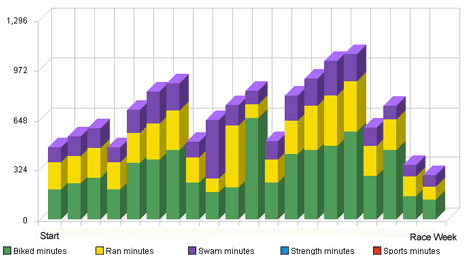 If, however, you are a competitor, then it is YOUR responsibility to do everything in your power to be the best athlete you can be. Whether you have a coach or not, it is your responsibility to know why you're doing certain workouts and how they work. I don't mean just that you can set up a season based on Periodization 101. I mean KNOW YOUR SHIT! It's YOUR responsibility to not flake on workouts whenever possible (and to NOT do the ones that you know will be bad for you). It's your responsibility to eat well and at the right times to fuel yourself. If there's one thing that gets on my last nerve more than someone who trains like a penguin and wants to be a cheetah, it's someone who considers themselves a "serious athlete," and yet they don't understand basic training principles, nutritional principles, and they slack off in half their workouts. I think that people who only train their strengths deserve what they get. If you want to be competitive, training has to be a priority. Because I'm sure training's a big priority for your competition, and you want to beat them, don't you?
If you want to be competitive, you have to assume that every single one of your competitors is out there training as hard as you or harder. On the day that you run so hard you almost puke, you have to assume your competitor wouldn't be afraid to hurl. You have to trust that your competitor isn't out there missing workouts. Your competitor isn't eating cookies and ice cream just because he/she had a bad day. Your competitor doesn't treat his/her bike like crap. Your competitor isn't staying up late at night and burning the candle at both ends. Your competitor is spending all his/her free time when they're not training reading, listening, and looking for ways to be better. You have to assume that your competitor is going to be just as diligent as the ideal you. If you've done everything within your power to be your best on race day, you'll know you're ready. Whether the Ideal You is good enough on race day to beat the competition is out of your control. But if you've done your homework, and studied AND practiced the sport (i.e. if you really know what you're doing) you'll know in your heart of hearts if you did everything you could do to be prepared for that day, or if the Ideal You got away from you. (Because in the end, we can only compete against ourselves). And only if you've absolutely, positively done everything that the Ideal You could have done, only THEN can you gripe about how life just isn't fair. For some reason, I doubt when that day comes that you'll be disappointed with the result, whatever it may be.
If you show up to races just to see the pretty trees and hills in a new place and hang out with old friends and new faces, that's great. I think that that's a worthy goal, and since this is my page, what I say is absolute truth. Don't let anyone tell you that participating's not good enough. That's enough for you, and no one should let you feel inferior for it. Train to finish comfortably and have fun. You can always change your mind and decide to train to be more competitive later, but only if you want to. But if that's the way you've trained, then don't sit there and gripe and grumble at the end of the race about how slow you are and how it's not fair. You're not allowed to train like a penguin and expect yourself to be a cheetah. Then again, if this is your style, you probably stopped reading this long ago.If, however, you are a competitor, then it is YOUR responsibility to do everything in your power to be the best athlete you can be. Whether you have a coach or not, it is your responsibility to know why you're doing certain workouts and how they work. I don't mean just that you can set up a season based on Periodization 101. I mean KNOW YOUR SHIT! It's YOUR responsibility to not flake on workouts whenever possible (and to NOT do the ones that you know will be bad for you). It's your responsibility to eat well and at the right times to fuel yourself. If there's one thing that gets on my last nerve more than someone who trains like a penguin and wants to be a cheetah, it's someone who considers themselves a "serious athlete," and yet they don't understand basic training principles, nutritional principles, and they slack off in half their workouts. I think that people who only train their strengths deserve what they get. If you want to be competitive, training has to be a priority. Because I'm sure training's a big priority for your competition, and you want to beat them, don't you?If you want to be competitive, you have to assume that every single one of your competitors is out there training as hard as you or harder. On the day that you run so hard you almost puke, you have to assume your competitor wouldn't be afraid to hurl. You have to trust that your competitor isn't out there missing workouts. Your competitor isn't eating cookies and ice cream just because he/she had a bad day. Your competitor doesn't treat his/her bike like crap. Your competitor isn't staying up late at night and burning the candle at both ends. Your competitor is spending all his/her free time when they're not training reading, listening, and looking for ways to be better. You have to assume that your competitor is going to be just as diligent as the ideal you. If you've done everything within your power to be your best on race day, you'll know you're ready. Whether the Ideal You is good enough on race day to beat the competition is out of your control. But if you've done your homework, and studied AND practiced the sport (i.e. if you really know what you're doing) you'll know in your heart of hearts if you did everything you could do to be prepared for that day, or if the Ideal You got away from you. (Because in the end, we can only compete against ourselves). And only if you've absolutely, positively done everything that the Ideal You could have done, only THEN can you gripe about how life just isn't fair. For some reason, I doubt when that day comes that you'll be disappointed with the result, whatever it may be.
Conclusion
As you may have guessed, this is more of a pep talk to myself than anything else. Feel free to ignore me or call me wrong. But if you sat here and spent all that time reading what I just wrote, please don't comment that I'm boring. You could have navigated away at any time. If you read it, it's not because I made you. Go off and write one of these for yourself if you want. Anyway, I hope this gives SOMEONE some food for thought at least. Certainly writing it has helped me work out some thoughts.
Friday, May 9, 2008
On the subject of volume
Iron Matron has a shirt that says, "I TRAIN MORE THAN YOU". How cool is that?! (Reminder: My birthday's coming up!!!)
I've been doing a lot of thinking about volume in the past couple of months. If you haven't figured it out yet, I try to do everything in my power to be the baddest assest mofo out there. Since genetics did not grant me the vessel to do this in speed, I try to pull my bragging rights from volume. I try to find the longest, craziest workouts and races possible, so that I'm sure to find myself in the middle of some adventure. That way, once the adventure is finished, I have something to write about, and therefore brag about what about what a badass I am.
And just a quick word on bragging, which has been a theme this week. I am not against ALL kinds of bragging, just the undeserved kind. Unless you are a world class athlete, I believe that you should have to acknowledge that there are better people out there. This can easily be achieved with 2 little words: "for me". Compare these examples:
~"I did a 2 hour ride on Saturday, that's a really long ride." vs. "I did a 2 hour ride on Saturday, that's a really long ride for me." The automatic reaction to the former is, "No it's not, there are people who commute to work on their bikes and log more time than that." The automatic reaction to the second is the desired response, "Wow, that's great!"
~"My last marathon time was really fast. I ran it in 5:00." (Reaction: Even my grandma can run marathons. That's not even fast! What? Did you walk it?) vs. "My last marathon time was really good for me. I finished! It took me 5 hours, but I did it, and that's enough, for me." (Reaction: Congratulations! That's awesome!)
The important thing is that you acknowledge that there are people out there that are faster than you, stronger than you, and who train more than you, but your most important competitor is yourself. You never know if the guy you're bragging to about your 3rd place AG in a local olympic race is actually a Kona age group winner. In my experience, the people who really are good tend to keep mum about it.
Okay, that being said, let's go back to talking about volume. I know that pretty much all of the books out there tell you to take a conservative approach to volume, and believe me, I've read them all. "Avoid overtraining at all costs," they say. "The body only gets stronger when you rest," they say. "Train smart, not long," they say. Run better by not running? I thought. It sounds kooky, but hey, it's a hell of a lot better than running! So for awhile I trained by not running. I would run like 1 speed session a week, 1 long run every four weeks or so and "rest hard". I did the same with biking and swimming, never doing "junk miles/yards". And I was always injured. Every long workout kicked the shit out of me. And I never got any faster. So I ran less and less, because clearly I was training too much and my body needed to recover more. And I still never got any better, and I still hated running. It wasn't till I started ignoring everything they say: running 2 days in a row, doing more than one long run in a week, doing hard sessions EVERY time I ran that I started to actually like running. I said, "Listen, body. This is what we're doing, and you're going to cut the shit and deal with it because I say so, so just get used to it." And I got better. Well, better for me.
Here's the thing: Dave Scott said in his 1985 book that you don't have to do tons of volume to get fast. He says that he trained less at the end of his career than he did at the beginning, and he was faster. But here's the thing: Back in the early days Dave Scott, Scott Molina, Scott Tinley and all those fast Scott guys were practically doing an ironman a day. No wonder they stayed fast when they cut their training in half, they were still training 25-30 hours a week!
The other thing that all the books say is that you should never run more than 20 miles when training for a marathon. You should never run more than 2.5 hours when training for an ironman. Ever. Or else you'll die. "Running tears your body down too much," they say. "It takes you too long to recover," they say. "The rest of your training will suffer, and it's not worth the trade-off," they say. But what I can't reconcile is that ultrarunners run way longer than that all the time! Some Ultrarunners run 50K-50 miles on a weekly basis, and I don't see them languishing in puddles of their own blahs. Ultrarunners blow me away.
The other thing about ultrarunners is that they never quit. I mean, they do sometimes, but it takes a lot for an ultrarunner to throw in the towel. In ultramarathons, people wind up in med tents with IVs in their arms and gangrene in their limbs and then go back out and run some more! I read Donald's race report for the Miwok 50k this morning. Donald had some stomach issues during the race. Now, what happens to a triathlete when they have stomach issues? Let's look at last year's Ironman Championships. Farris Al Saltan had a stomach bug and didn't start the race. Norman Stadtler was puking all over his bike and pulled out after like 30 miles. Natascha Badmann had a crash, fucked up her bike and her shoulder and dropped out (here I guess she had no choice, but we needed a female example). However, Donald, our average age grouper ultrarunner had stomach issues, just gave himself the two-finger stomach treatment and kept right on running. This is not uncommon in ultra events from what I gather. It is quite common to feel awful at mile 60 of a 100 mile race, puke your brains out, maybe pop some blisters the size of hampsters, and feel fine 15 miles later. I'm not sure what "fine" feels like to an ultrarunner at mile 75, is a deeper misery than any of us triathletes will ever feel in our lives, I'm sure.
Which brings me to my next point: suffering. I'm going to assume that if you're reading this, you've run a marathon. If you haven't, summon from your memory everything you've ever heard about a marathon and pretend that you have. Remember when running 26 miles was impossible? How you weren't sure if you'd finish? It's only impossible until you get your mind around it. When you started running 3 miles seemed like a long way, then you gradually built up to 6 and 3 seemed like nothing. A half marathon seemed like a daunting run, until you started training for the marathon and discovered that the pain only BEGINS in a half marathon. In my experience, a 10k still hurts just as much now as it did in high school. A half marathon makes me just as tired at the end now as it did a few years ago. And the marathon, well miles 20-26.2 never seem to hurt any less. For me, anyway. But "long" is so arbitrary. A distance is only "long" until you get your mind around it. What's changed is that your mind (or my mind at any rate) has accepted that 'this is possible and this pain is just something that people deal with'.
Remember the story of the 4-minute mile? How doctors said that it was impossible and that someone would die from the exertion if they tried? And then Roger Banister did it, and suddenly a dozen guys did it in the same year. And the record keeps dropping (the record is now 3:43.13). People just drew a line in the sand at 4:00 and said, "The body can take no more." But your body doesn't know the difference between 4:01 and 3:58. It's the same with distance. Miles and kilometers are human inventions. 20 miles is just the breaking point because they say it is. Well who decided that? Your body doesn't know what 20 miles is, other than that it's the distance that you usually say, "okay, enough is enough. You can rest now, body. I won't make you work any harder." You only think 10 miles is long until you start training to run 26. You only think a marathon is long until you hear that people run 100 mile races, and longer. I guess, suddenly, when you know that someone else has done it you can tell yourself, 'It's not going to kill you, so just get over it.'
So if a marathon hurts THAT MUCH for everyone, what does 50 or 100 miles feel like?! Where do you go in your head in an event like that?
"Never run more than 20 miles in training"? Hogwash! You tell an ultrarunner that and they'll laugh in your face. They say you shouldn't run more than 2 marathons in a year, but then there are people like Dean Karnazes who run 50 consecutive marathons in 50 days. By all accounts he should have finished in splinters. Instead, he walked out of his hotel in New York the day after he finished and ran all the way to Missouri. It's like the old saying, "Whether you think you can or you think you can't, you're right."
I realize that not everyone WANTS to spend every spare minute of their life training. I know that for many, it really just doesn't sound like the most fun thing in the world to push yourself to new levels of suffering every time you get a free weekend. They just want to finish, be proud of themselves, and brag to their friends. That's cool. Thank goodness there are dozens of books out there that tell you exactly how to achieve those goals. But still, you find me the professional that's winning races on 10-12 hours of training a week, and I'll revise my theories.
Then there are people like me (and tens of thousands of others). I was listening to a podcast the other day from a couple of coaches who really nailed it. They said, "We want to get you in shape so that you can do really cool stuff with your fitness." It was the first time I'd heard my philosophy come out of someone else's mouth. It's on iTunes, you can listen to it yourself (although admittedly, it's pretty boring). It's the e-nation episode on epic weekends I believe.
So what am I talking about? I don't know, I kind of forgot. That happens to me a lot. One conclusion I could come to is to say "fuck you" to all the people who make me feel crazy about distance (or the people who make me feel like I'm being put on a pedistal for it – this is only good for me, there are others out there who are stronger and faster). Maybe I wanted to say that ultramarathoners are the baddest assest motherfuckers out there. They definitely put any ironman to shame with the heights of suffering they go to. But did I really need 2,000 words to say that?
Oh, no, wait, I remember what it was! The pool was closed this morning, and I found myself with nothing to do. I had some coffee, got all jittered up, and couldn't stop writing. THAT's what it was!
If you happen to know my secret (Cranky, Gretchen, Mindy), please don't spill the beans. Thanks.
I've been doing a lot of thinking about volume in the past couple of months. If you haven't figured it out yet, I try to do everything in my power to be the baddest assest mofo out there. Since genetics did not grant me the vessel to do this in speed, I try to pull my bragging rights from volume. I try to find the longest, craziest workouts and races possible, so that I'm sure to find myself in the middle of some adventure. That way, once the adventure is finished, I have something to write about, and therefore brag about what about what a badass I am.
And just a quick word on bragging, which has been a theme this week. I am not against ALL kinds of bragging, just the undeserved kind. Unless you are a world class athlete, I believe that you should have to acknowledge that there are better people out there. This can easily be achieved with 2 little words: "for me". Compare these examples:
~"I did a 2 hour ride on Saturday, that's a really long ride." vs. "I did a 2 hour ride on Saturday, that's a really long ride for me." The automatic reaction to the former is, "No it's not, there are people who commute to work on their bikes and log more time than that." The automatic reaction to the second is the desired response, "Wow, that's great!"
~"My last marathon time was really fast. I ran it in 5:00." (Reaction: Even my grandma can run marathons. That's not even fast! What? Did you walk it?) vs. "My last marathon time was really good for me. I finished! It took me 5 hours, but I did it, and that's enough, for me." (Reaction: Congratulations! That's awesome!)
The important thing is that you acknowledge that there are people out there that are faster than you, stronger than you, and who train more than you, but your most important competitor is yourself. You never know if the guy you're bragging to about your 3rd place AG in a local olympic race is actually a Kona age group winner. In my experience, the people who really are good tend to keep mum about it.
Okay, that being said, let's go back to talking about volume. I know that pretty much all of the books out there tell you to take a conservative approach to volume, and believe me, I've read them all. "Avoid overtraining at all costs," they say. "The body only gets stronger when you rest," they say. "Train smart, not long," they say. Run better by not running? I thought. It sounds kooky, but hey, it's a hell of a lot better than running! So for awhile I trained by not running. I would run like 1 speed session a week, 1 long run every four weeks or so and "rest hard". I did the same with biking and swimming, never doing "junk miles/yards". And I was always injured. Every long workout kicked the shit out of me. And I never got any faster. So I ran less and less, because clearly I was training too much and my body needed to recover more. And I still never got any better, and I still hated running. It wasn't till I started ignoring everything they say: running 2 days in a row, doing more than one long run in a week, doing hard sessions EVERY time I ran that I started to actually like running. I said, "Listen, body. This is what we're doing, and you're going to cut the shit and deal with it because I say so, so just get used to it." And I got better. Well, better for me.
Here's the thing: Dave Scott said in his 1985 book that you don't have to do tons of volume to get fast. He says that he trained less at the end of his career than he did at the beginning, and he was faster. But here's the thing: Back in the early days Dave Scott, Scott Molina, Scott Tinley and all those fast Scott guys were practically doing an ironman a day. No wonder they stayed fast when they cut their training in half, they were still training 25-30 hours a week!
The other thing that all the books say is that you should never run more than 20 miles when training for a marathon. You should never run more than 2.5 hours when training for an ironman. Ever. Or else you'll die. "Running tears your body down too much," they say. "It takes you too long to recover," they say. "The rest of your training will suffer, and it's not worth the trade-off," they say. But what I can't reconcile is that ultrarunners run way longer than that all the time! Some Ultrarunners run 50K-50 miles on a weekly basis, and I don't see them languishing in puddles of their own blahs. Ultrarunners blow me away.
The other thing about ultrarunners is that they never quit. I mean, they do sometimes, but it takes a lot for an ultrarunner to throw in the towel. In ultramarathons, people wind up in med tents with IVs in their arms and gangrene in their limbs and then go back out and run some more! I read Donald's race report for the Miwok 50k this morning. Donald had some stomach issues during the race. Now, what happens to a triathlete when they have stomach issues? Let's look at last year's Ironman Championships. Farris Al Saltan had a stomach bug and didn't start the race. Norman Stadtler was puking all over his bike and pulled out after like 30 miles. Natascha Badmann had a crash, fucked up her bike and her shoulder and dropped out (here I guess she had no choice, but we needed a female example). However, Donald, our average age grouper ultrarunner had stomach issues, just gave himself the two-finger stomach treatment and kept right on running. This is not uncommon in ultra events from what I gather. It is quite common to feel awful at mile 60 of a 100 mile race, puke your brains out, maybe pop some blisters the size of hampsters, and feel fine 15 miles later. I'm not sure what "fine" feels like to an ultrarunner at mile 75, is a deeper misery than any of us triathletes will ever feel in our lives, I'm sure.
Which brings me to my next point: suffering. I'm going to assume that if you're reading this, you've run a marathon. If you haven't, summon from your memory everything you've ever heard about a marathon and pretend that you have. Remember when running 26 miles was impossible? How you weren't sure if you'd finish? It's only impossible until you get your mind around it. When you started running 3 miles seemed like a long way, then you gradually built up to 6 and 3 seemed like nothing. A half marathon seemed like a daunting run, until you started training for the marathon and discovered that the pain only BEGINS in a half marathon. In my experience, a 10k still hurts just as much now as it did in high school. A half marathon makes me just as tired at the end now as it did a few years ago. And the marathon, well miles 20-26.2 never seem to hurt any less. For me, anyway. But "long" is so arbitrary. A distance is only "long" until you get your mind around it. What's changed is that your mind (or my mind at any rate) has accepted that 'this is possible and this pain is just something that people deal with'.
Remember the story of the 4-minute mile? How doctors said that it was impossible and that someone would die from the exertion if they tried? And then Roger Banister did it, and suddenly a dozen guys did it in the same year. And the record keeps dropping (the record is now 3:43.13). People just drew a line in the sand at 4:00 and said, "The body can take no more." But your body doesn't know the difference between 4:01 and 3:58. It's the same with distance. Miles and kilometers are human inventions. 20 miles is just the breaking point because they say it is. Well who decided that? Your body doesn't know what 20 miles is, other than that it's the distance that you usually say, "okay, enough is enough. You can rest now, body. I won't make you work any harder." You only think 10 miles is long until you start training to run 26. You only think a marathon is long until you hear that people run 100 mile races, and longer. I guess, suddenly, when you know that someone else has done it you can tell yourself, 'It's not going to kill you, so just get over it.'
So if a marathon hurts THAT MUCH for everyone, what does 50 or 100 miles feel like?! Where do you go in your head in an event like that?
"Never run more than 20 miles in training"? Hogwash! You tell an ultrarunner that and they'll laugh in your face. They say you shouldn't run more than 2 marathons in a year, but then there are people like Dean Karnazes who run 50 consecutive marathons in 50 days. By all accounts he should have finished in splinters. Instead, he walked out of his hotel in New York the day after he finished and ran all the way to Missouri. It's like the old saying, "Whether you think you can or you think you can't, you're right."
I realize that not everyone WANTS to spend every spare minute of their life training. I know that for many, it really just doesn't sound like the most fun thing in the world to push yourself to new levels of suffering every time you get a free weekend. They just want to finish, be proud of themselves, and brag to their friends. That's cool. Thank goodness there are dozens of books out there that tell you exactly how to achieve those goals. But still, you find me the professional that's winning races on 10-12 hours of training a week, and I'll revise my theories.
Then there are people like me (and tens of thousands of others). I was listening to a podcast the other day from a couple of coaches who really nailed it. They said, "We want to get you in shape so that you can do really cool stuff with your fitness." It was the first time I'd heard my philosophy come out of someone else's mouth. It's on iTunes, you can listen to it yourself (although admittedly, it's pretty boring). It's the e-nation episode on epic weekends I believe.
So what am I talking about? I don't know, I kind of forgot. That happens to me a lot. One conclusion I could come to is to say "fuck you" to all the people who make me feel crazy about distance (or the people who make me feel like I'm being put on a pedistal for it – this is only good for me, there are others out there who are stronger and faster). Maybe I wanted to say that ultramarathoners are the baddest assest motherfuckers out there. They definitely put any ironman to shame with the heights of suffering they go to. But did I really need 2,000 words to say that?
Oh, no, wait, I remember what it was! The pool was closed this morning, and I found myself with nothing to do. I had some coffee, got all jittered up, and couldn't stop writing. THAT's what it was!
If you happen to know my secret (Cranky, Gretchen, Mindy), please don't spill the beans. Thanks.
Subscribe to:
Posts (Atom)